Books › Principles of instrumental analysis

Principles of instrumental analysis
First published 1971 · 1062 pages
A rigorous, foundational journey into the precise mechanics of chemical analysis and instrumentation.
What it feels like
Reading this book feels like stepping into a brightly lit, impeccably organized laboratory. The text demands a methodical, steady pace, rewarding careful study with a profound understanding of how we measure and quantify the physical world. The prose is uncompromisingly technical yet accessible to the dedicated student, prioritizing clarity, precision, and theoretical depth over narrative flourish. As you progress through the dense chapters, the initial sense of overwhelming complexity gradually gives way to a deeply satisfying mastery of analytical methodologies and instrumental mechanics. It is a purely intellectual experience, designed specifically for the rigorous minds of chemistry students and laboratory professionals who find genuine beauty in exactitude, empirical data, and the elegant mechanics of modern scientific instruments.
- Mood
- clinical
- focused
- intellectual
- structured
- Tone
- authoritative
- objective
- precise
- instructional
- academic
- Pace
- steady
- Themes
- scientific inquiry · technological precision · analytical methodology · problem-solving
- The writing
- Clear, dense, and highly technical, prioritizing accuracy and instructional clarity over stylistic flourish.
- The arc
- Moves from foundational curiosity to a satisfying, rigorous mastery of complex analytical techniques.
- Who it's for
- Chemistry students and laboratory professionals who crave a comprehensive, rigorous understanding of analytical instrumentation.
About the book
PRINCIPLES OF INSTRUMENTAL ANALYSIS has long been the standard for courses that deal with the principles and applications of modern analytical instruments. Now with their new Sixth Edition, authors Douglas A. Skoog, F. James Holler, and Stanley R. Crouch infuse their popular text with updated techniques as well as new Instrumental Analysis in Action case studies. The book's updated material enhances its proven approach, which places an emphasis on the theoretical basis of each type of instrument, its optimal area of application,
Description from Open Library.
Books like Principles of instrumental analysis
See why they match Fundamentals of analytical chemistryDouglas A SkoogA rigorous, methodical immersion into the exactitude of the chemical sciences.
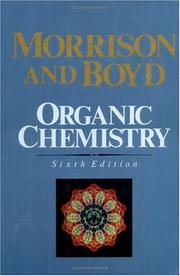 Organic chemistryRobert Thornton MorrisonA rigorous, foundational journey into the architecture of molecules that transforms chemical chaos into elegant, logical structure.
 Fundamentals of biochemistryDonald Voet, Judith G. Voet and othersA rigorous, illuminating journey into the molecular machinery that powers life itself.
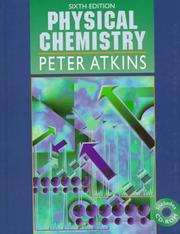 Physical chemistryP. W. AtkinsA rigorous, intellectually demanding exploration of the mathematical and physical foundations that govern chemical behavior.
 Organic ChemistryT. W. Graham SolomonsA rigorous, structured journey into the molecular architecture of the natural world.
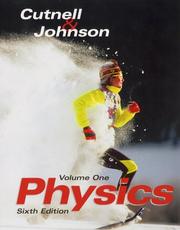 PhysicsJohn D. CutnellA methodical, illuminating guide that transforms the chaotic phenomena of the everyday world into elegant, predictable mathematical realities.