Books › She Has Her Mother’s Laugh

She Has Her Mother’s Laugh
The Powers, Perversions, and Potential of Heredity
544 pages
A sweeping, deeply human exploration of the invisible threads that connect us to our ancestors, our descendants, and the world around us.
What it feels like
Reading this book feels like stepping into a vast, brilliantly lit museum of human history and biology, guided by a narrator who is as empathetic as he is knowledgeable. The pace is steady and deliberate, allowing you to absorb the sheer weight of how much we misunderstand about our own origins. It balances the dark, sobering history of eugenics and scientific hubris with moments of profound, awe-inspiring clarity about the microscopic miracles happening within our cells. The prose is elegantly lucid, translating dense genetic science into a deeply moving narrative about identity and interconnectedness. It is an intellectually expansive experience that will delight curious minds who want to look at their family tree, their bodies, and their world with entirely new eyes.
- Mood
- intellectually stimulating
- expansive
- contemplative
- awe-inspiring
- Tone
- inquisitive
- lucid
- empathetic
- thoughtful
- authoritative
- Pace
- steady
- Themes
- the complexity of identity · historical scientific missteps · interconnectedness of life · nature versus nurture · the legacy of ancestry
- The writing
- Lucid and narrative-driven, seamlessly weaving complex biological concepts into compelling, accessible human stories.
- The arc
- Journeys from historical curiosity and sobering reflections on scientific hubris to a profound, expansive awe at the intricate tapestry of human biology.
- Who it's for
- Curious readers who crave deep, philosophical explorations of science, history, and what it truly means to be human.
Content notes
- discussions of eugenics
- scientific racism
- genetic diseases
- historical medical exploitation
About the book
Celebrated New York Times columnist and science writer Carl Zimmer presents a profoundly original perspective on what we pass along from generation to generation. Charles Darwin played a crucial part in turning heredity into a scientific question, and yet he failed spectacularly to answer it. The birth of genetics in the early 1900s seemed to do precisely that. Gradually, people translated their old notions about heredity into a language of genes. As the technology for studying genes became cheaper, millions of people ordered genetic tests to link themselves to missing parents, to distant ancestors, to ethnic identities... But, Zimmer writes, "Each of us carries an amalgam of fragments of DNA, stitched together from some of our many ancestors. Each piece has its own ancestry, traveling a different path back through human history. A particular fragment may sometimes be cause for worry, but most of our DNA influences who we are--our appearance, our height, our penchants--in inconceivably subtle ways." Heredity isn't just about genes that pass from parent to child. Heredity continues within our own bodies, as a single cell gives rise to trillions of cells that make up our bodies. We say we inherit genes from our ancestors--using a word that once referred to kingdoms and estates--but we inherit other things that matter as much or more to our lives, from microbes to technologies we use to make life more comfortable. We need a new definition of what heredity is and, through Carl Zimmer's lucid exposition and storytelling, this resounding tour de force delivers it. Weaving historical and current scientific research, his own experience with his two daughters, and the kind of original reporting expected of one of the world's best science journalists, Zimmer ultimately unpacks urgent bioethical quandaries arising from new biomedical technologies, but also long-standing presumptions about who we really are and what we can pass on to future generations.
Description from Open Library.
Books like She Has Her Mother’s Laugh
See why they match A Brief History of Everyone Who Ever LivedAdam RutherfordA witty, mind-expanding journey through our DNA that proves human history is far messier and more interconnected than we ever imagined.
 The descent of manCharles DarwinAn illuminating journey through the foundational ideas of human evolution, bridging historical scientific insight with modern genetic understanding.
 Who we are and how we got hereDavid Reich (Of Harvard Medical School)A sweeping, science-driven journey through deep time that rewrites the story of human ancestry and interconnectedness.
 EvolutionCarl ZimmerA thoughtful exploration of the historical roots and enduring significance of a foundational scientific concept.
 Hacking DarwinJamie Frederic MetzlAn urgent, mind-expanding journey to the frontier of human evolution, where science fiction collides with profound moral choices.
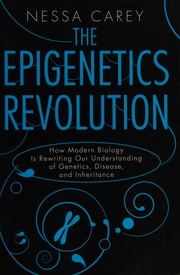 The epigenetics revolutionNessa CareyAn illuminating journey into the microscopic mechanisms that bridge the gap between our DNA and our lived experiences.