Books › Who we are and how we got here

Who we are and how we got here
368 pages
A sweeping, science-driven journey through deep time that rewrites the story of human ancestry and interconnectedness.
What it feels like
Reading this book feels like watching a massive, complex puzzle assemble itself across millennia. The prose is steady and authoritative, guiding you through the dense thickets of genomic science with the clarity of a seasoned storyteller. It carries an expansive, revelatory mood, shifting your perspective from the immediate present to the vast, interconnected web of deep time. You are left with a profound sense of awe at the sheer scale of human migration and mixing, dismantling old myths of pure lineages. It is a deeply intellectual yet humbling experience, perfect for readers who crave a paradigm-shifting understanding of our origins. Fans of sweeping historical narratives grounded in cutting-edge science will find themselves completely absorbed by this rigorous, illuminating exploration of our shared past.
- Mood
- expansive
- revelatory
- intellectual
- humbling
- Tone
- authoritative
- analytical
- earnest
- objective
- Pace
- steady
- Themes
- deep time · human interconnectedness · the myth of purity · technological revolution · migration and mixing
- The writing
- Clear, precise, and accessible, translating complex genetic data into a compelling narrative of human history.
- The arc
- Moves from a baseline of historical curiosity to a profound, humbling awe at the deeply intertwined nature of the human family.
- Who it's for
- Curious minds fascinated by anthropology, deep history, and how cutting-edge science reshapes our understanding of ourselves.
Content notes
- discussions of historical inequality
- colonialism
- scientific racism (critiqued)
About the book
"A groundbreaking book about how technological advances in genomics and the extraction of ancient DNA have profoundly changed our understanding of human prehistory while resolving many long-standing controversies. Massive technological innovations now allow scientists to extract and analyze ancient DNA as never before, and it has become clear--in part from David Reich's own contributions to the field--that genomics is as important a means of understanding the human past as archeology, linguistics, and the written word. Now, in The New Science of the Human Past, Reich describes with unprecedented clarity just how the human genome provides not only all the information that a fertilized human egg needs to develop but also contains within it the history of our species. He delineates how the Genomic Revolution and ancient DNA are transforming our understanding of our own lineage as modern humans; how genomics deconstructs the idea that there are no biologically meaningful differences among human populations (though without adherence to pernicious racist hierarchies); and how DNA studies reveal the deep history of human inequality--among different populations, between the sexes, and among individuals within a population"--
Description from Open Library.
Books like Who we are and how we got here
See why they match A Brief History of Everyone Who Ever LivedAdam RutherfordA witty, mind-expanding journey through our DNA that proves human history is far messier and more interconnected than we ever imagined.
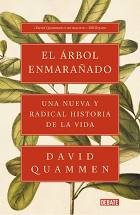 The tangled treeDavid QuammenA mind-expanding journey into the messy, interconnected web of life that rewrites everything you thought you knew about evolution.
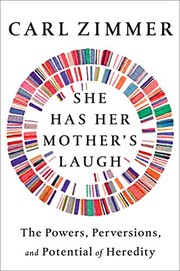 She Has Her Mother’s LaughCarl ZimmerA sweeping, deeply human exploration of the invisible threads that connect us to our ancestors, our descendants, and the world around us.
 OriginJennifer RaffAn expansive, scientifically grounded exploration of the deep ancestral history and genetic legacy of the Americas.
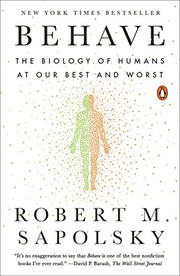 BehaveRobert M. SapolskyA witty, mind-expanding journey backward through time to uncover the biological and environmental roots of our greatest triumphs and darkest impulses.
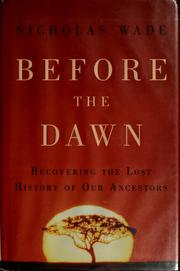 Before the dawnNicholas WadeAn expansive, science-driven journey into the deep past that decodes the genetic breadcrumbs of our earliest ancestors.