Books › Sybil, or, The Two Nations
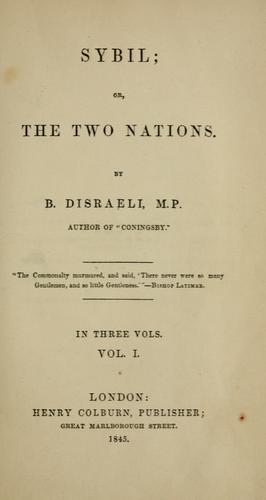
Sybil, or, The Two Nations
747 pages
A stark and earnest exploration of a deeply divided society, blending political fervor with romantic hope.
What it feels like
Reading this novel feels like stepping into the starkly divided world of nineteenth-century Britain, where the chasm between the pampered elite and the struggling working class is laid bare. The narrative unfolds at a steady, deliberate pace, blending impassioned political critique with the emotional pull of a love story. The mood is serious and indignant, driven by an earnest desire to expose social injustices and the harsh realities of poverty. The prose is formal yet deeply invested in the ideological battles of its time, capturing the fervor of the Chartist movement. It is a book that will delight readers who are drawn to historical political fiction that wrestles with profound wealth inequality and the enduring struggle for social reform.
- Mood
- stark
- serious
- reflective
- indignant
- Tone
- earnest
- critical
- observant
- impassioned
- Pace
- steady
- Themes
- stark class divides · social injustice · political reform · wealth inequality · romantic entanglement
- The writing
- Formal and politically charged, blending historical observation with earnest narrative storytelling.
- The arc
- Moves from a stark confrontation with deep social inequalities to an impassioned plea for reform, intertwined with romantic hope.
- Who it's for
- Readers who appreciate nineteenth-century political fiction that tackles deep social inequalities alongside romantic elements.
Content notes
- poverty
- social injustice
- class discrimination
About the book
Benjamin Disraeli was a remarkable historical figure. Born into a Jewish family, he converted to Anglican Christianity as a child. He is now almost certainly most famous for his political career. Becoming a member of the British Parliament at the age of 33, he initially rose to prominence within the Conservative (“Tory”) party because of his clashes with the then Prime Minister Sir Robert Peel. Rising to lead the Conservative Party, Disraeli became Prime Minister for a short period in 1868, and then for an extended period between 1874 and 1880. He became friendly with Queen Victoria and was appointed Earl of Beaconsfield by her in 1876. However, Disraeli was much more than a politician. He wrote both political treatises and no less than seventeen novels during his lifetime, of which Sybil, or The Two Nations is now among the best regarded. The “Two Nations” of the subtitle refer to the divisions in Britain between the rich and the poor, each of whom might as well be living in a different country from the other. In the novel, Disraeli highlights the terrible living conditions of the poor and the shocking injustices of how they were treated by most employers and land-owners. He contrasts this with the frivolous, pampered lifestyles of the aristocracy. He covers the rise of the Chartist movement, which was demanding universal manhood suffrage—the right for all adult men to vote, regardless of whether they owned property—and other reforms to enable working men a voice in the government of the country. (Female suffrage was to come much later). The upheavals of the time led to the development of the People’s Charter and a massive petition with millions of signatures being presented to Parliament. However the Parliament of the time refused to even consider the petition, triggering violent protests in Birmingham and elsewhere. All of this is well covered and explained in the novel. Sybil is rather disjointed in structure as it ranges over these different topics, but the main plot revolves around Egremont, the younger son of a nobleman, who encounters some of the leaders of the workers’ movement and in particular Walter Gerard, one of the most respected of these leaders, whom Egremont befriends while concealing his real name and social position. During visits to Gerard under an assumed name, Egremont falls for the beautiful and saintly Sybil, Gerard’s daughter, but she rejects him when his true identity is exposed. Sybil subsequently undergoes many difficult trials as the people’s movement develops and comes into conflict with the authorities.
Description from Open Library.
Books like Sybil, or, The Two Nations
See why they match Phineas Finn, the Irish memberAnthony TrollopeAn observant, socially intricate dive into the triumphs, failures, and romantic entanglements of a young man navigating the high-stakes world of British politics.
 ShirleyCharlotte BrontëA sweeping Victorian tapestry that weaves the fires of industrial rebellion with the quiet, burning intensity of female independence and slow-burn romance.
 Sylvia\'s Lovers CompleteElizabeth Cleghorn GaskellA windswept, tragic tale of a coastal town where a single withheld truth unravels multiple lives.
 CranfordDavid AscoliA warm, witty, and gently meandering stroll through the teacups, card games, and quiet dignities of a matriarchal English village.
 Mary BartonElizabeth GaskellA gritty, compassionate plunge into the heart of the Industrial Revolution, where romance and murder collide with the desperate struggle for survival.
 Sons and LoversDavid Herbert LawrenceA visceral, psychologically intense exploration of a young man suffocating under the weight of his mother's all-consuming love.