Books › The Death and Life of Great American Cities
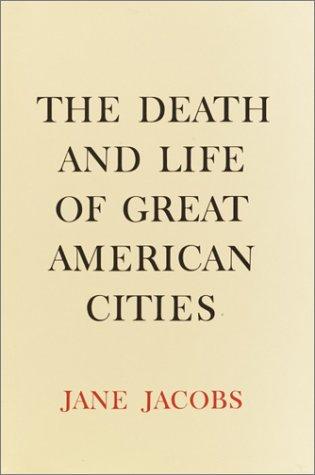
The Death and Life of Great American Cities
598 pages
A passionate, street-level defense of the messy, vibrant ballet of urban life against the sterile visions of top-down planners.
What it feels like
Reading this book feels like taking a long, observant walk through a bustling neighborhood with a fiercely intelligent friend. It is a steady, grounded experience that immerses you in the sidewalk ballet of city life, shifting your perspective on every street corner, stoop, and storefront you pass. The prose is sharp, delightfully epigrammatic, and deeply human, blending biting critiques of sterile, top-down urban planning with a passionate, almost poetic appreciation for organic community vitality. It doesn't read like a dry textbook; rather, it pulses with the energy of the streets it defends. This is an essential, paradigm-shifting read for armchair sociologists, urbanists, and anyone who finds joy in the messy, vibrant choreography of a thriving city block.
- Mood
- bustling
- grounded
- intellectual
- vibrant
- Tone
- passionate
- observant
- biting
- sensible
- authoritative
- Pace
- steady
- Themes
- the choreography of the street · human-scale design · organic community · the failure of top-down authority · urban vitality
- The writing
- Sharp, highly observant, and delightfully epigrammatic, blending sociological critique with literary descriptions of street life.
- The arc
- Moves from a sharp, critical dismantling of orthodox planning to a hopeful, deeply observed appreciation of organic city life.
- Who it's for
- Urbanists, armchair sociologists, and anyone who loves people-watching from a stoop or cafe window.
Content notes
- systemic neglect
- urban decay
About the book
The Death and Life of Great American Cities was described by The New York Times as “perhaps the most influential single work in the history of town planning.... [It] can also be seen in a much larger context. It is first of all a work of literature; the descriptions of street life as a kind of ballet and the bitingly satiric account of traditional planning theory can still be read for pleasure even by those who long ago absorbed and appropriated the book’s arguments.” Jane Jacobs, an editor and writer on architecture in New York City in the early sixties, argued that urban diversity and vitality were being destroyed by powerful architects and city planners. Rigorous, sane, and delightfully epigrammatic, Jane Jacobs’s tour de force is a blueprint for the humanistic management of cities. It remains sensible, knowledgeable, readable, and indispensable.
Description from Open Library.
Books like The Death and Life of Great American Cities
See why they match Triumph of the CityEdward GlaeserAn exhilarating, data-backed love letter to the bustling, messy, and miraculous engine of human progress: the metropolis.
 The power broker: Robert Moses and the fall of New YorkRobert A. CaroA monumental, infuriating masterclass in how raw power is actually accumulated, wielded, and weaponized against the vulnerable.
 A pattern languageChristopher AlexanderA philosophical and practical field guide to building spaces that feel deeply, fundamentally alive.
 The Timeless Way of BuildingChristopher AlexanderA meditative journey into the soul of architecture that reveals how spaces can feel as natural and alive as the people who inhabit them.
 The Geography of nowhereJames Howard KunstlerA biting, hilarious, and deeply felt critique of the American suburban landscape and the spiritual toll of the parking lot.
 Dark age aheadJane JacobsA sobering, analytical look at the fraying threads of modern civilization and the looming shadow of cultural amnesia.