Books › The Economics of Money, Banking, and Financial Markets

The Economics of Money, Banking, and Financial Markets
832 pages
A rigorous, illuminating deep-dive into the invisible gears that keep the global economy turning—and what happens when they jam.
What it feels like
Reading this is like being handed the blueprints to the global economy. The pace is necessarily steady, demanding a methodical approach as it builds from basic concepts of currency to the dizzying complexities of central banking and subprime meltdowns. The mood is deeply intellectual and structured, grounded in an objective, analytical tone that strips away political noise to reveal the raw mechanics of finance. The prose is didactic and information-dense, prioritizing absolute clarity and real-world application over stylistic flair. It lacks the narrative sweep of a trade paperback, offering instead the profound satisfaction of sudden, systemic comprehension. This is an experience for the rigorous thinker—the student or professional who wants to look past the headlines and understand the actual plumbing of our financial reality.
- Mood
- intellectual
- structured
- serious
- illuminating
- Tone
- authoritative
- analytical
- objective
- didactic
- pragmatic
- Pace
- steady
- Themes
- systemic interconnectedness · financial stability · mechanisms of crisis · institutional power · economic reality
- The writing
- Clear, structured, and information-dense, prioritizing pedagogical clarity and real-world application over stylistic flourish.
- The arc
- Moves from a foundational curiosity about everyday money to a complex, sobering appreciation of global financial machinery.
- Who it's for
- Economics students and finance enthusiasts seeking a rigorous, comprehensive breakdown of how global financial systems actually operate.
Content notes
- discussions of financial crises
- economic instability
About the book
"For Second or Third Level Courses in Money and Banking. Never has the study of Money and Banking been as relevant as it is today. The Economics of Money, Banking, and the Financial Markets gives the most comprehensive coverage on the current financial crisis in relation to financial markets, financial institutions, the central bank, monetary policy and fiscal policy. The authoritative approach, use of real life examples and effective pedagogy have been maintained in this issue while an increased focus on finance has been introduced. For the first time, MyEconLab will be packaged with the text at no extra cost. MyEconLab is a premier online assessment and tutorial system, pairing rich online content with innovative learning tools." Publisher's note.
"New To This Edition Coverage of the Financial Crisis: New chapters have been added as well as many new and revised sections, applications and boxes to address the changes since the financial crisis. New Chapter 9 is devoted to analyzing the recent financial crisis and the institutions involved. Chapter 9: Financial Crises and the Subprime Meltdown outlines the events that led up to the recent financial crisis and attempts to make sense of how and why it occurred. New Chapter 12: Nonbank Financial Institutions examines how institutions engaged in nonbank finance (insurance companies, pension funds, finance companies, mutual funds, hedge funds, and private equity and venture capital funds) operate and how they are regulated. It also examines recent trends in nonbank finance and how nonbank financial institutions were affected by the subprime meltdown A new end-of-chapter feature called Quantitative Problems has been added. This section also features CANSIM questions. 2-4 new end-of-chapter problems in each chapter New part introductions have been added." Publisher's note.
Description from Open Library.
Books like The Economics of Money, Banking, and Financial Markets
See why they match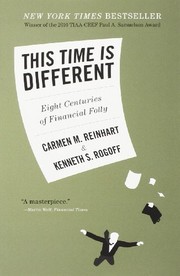 This time is differentCarmen M. ReinhartA sweeping, data-rich reality check that proves financial hubris is humanity's oldest repeating loop.
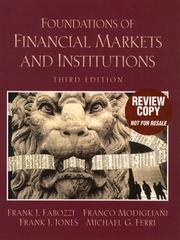 Foundations of Financial Markets and Institutions (3rd Edition)Frank J. Fabozzi, Franco Modigliani and othersA rigorous, structured immersion into the mechanics and institutions that drive global economies.
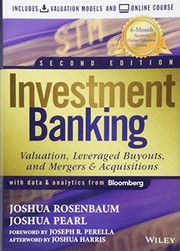 Investment BankingJoshua Rosenbaum and Joshua PearlA rigorous, no-nonsense masterclass that transforms daunting financial theory into the practical toolkit needed to survive on Wall Street.
 Commercial bank managementPeter S. RoseA comprehensive, structured deep dive into the mechanics and administration of the financial services industry.
 Basic economicsThomas SowellA masterclass in stripping away political rhetoric to reveal the hidden, often counterintuitive gears that drive human societies.
 How an economy grows and why it crashesPeter D. SchiffA witty, take-no-prisoners allegory that transforms dense macroeconomic theory into an accessible, eye-opening narrative.