Books › The failure of risk management
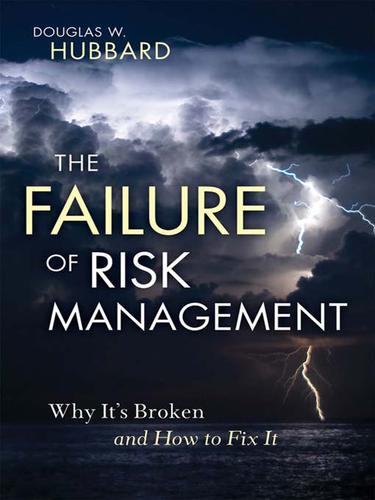
The failure of risk management
First published 2009 · 384 pages
A sharp, authoritative dismantling of corporate guesswork that rebuilds risk assessment on a foundation of scientific rigor.
What it feels like
Reading this book feels like sitting down with a brilliant, no-nonsense consultant who is finally saying the quiet part out loud about corporate guesswork. The tone is sharp and authoritative, moving at a steady pace as it dismantles popular but flawed methodologies—comparing some to mere astrology—before pivoting to rigorous, scientifically proven solutions. The mood shifts from an urgent critique of systemic failures, grounded in sobering examples like the 2008 credit crisis and engineering disasters, to a pragmatic, solution-oriented atmosphere. The prose is clear and direct, designed to cut through industry jargon and deliver actionable insights. It is an essential, intellectually rigorous experience for business leaders, IT professionals, and academics who want to replace illusion with calibrated, measurable reality.
- Mood
- intellectually rigorous
- urgent
- solution-oriented
- Tone
- critical
- authoritative
- analytical
- pragmatic
- Pace
- steady
- Themes
- systemic failure · scientific rigor · methodological reform · corporate accountability
- The writing
- Clear, direct, and grounded in real-world examples, balancing sharp critique with practical instruction.
- The arc
- Moves from a sharp critique of flawed, pseudo-scientific practices to a confident, constructive vision for scientifically grounded solutions.
- Who it's for
- Business leaders, IT professionals, and academics looking to replace ineffective corporate guesswork with rigorous, scientifically proven assessment methods.
Content notes
- financial crises
- natural disasters
- engineering disasters
About the book
An essential guide to the calibrated risk analysis approach The Failure of Risk Management takes a close look at misused and misapplied basic analysis methods and shows how some of the most popular "risk management" methods are no better than astrology! Using examples from the 2008 credit crisis, natural disasters, outsourcing to China, engineering disasters, and more, Hubbard reveals critical flaws in risk management methods--and shows how all of these problems can be fixed. The solutions involve combinations of scientifically proven and frequently used methods from nuclear power, exploratory oil, and other areas of business and government. Finally, Hubbard explains how new forms of collaboration across all industries and government can improve risk management in every field. Douglas W. Hubbard (Glen Ellyn, IL) is the inventor of Applied Information Economics (AIE) and the author of Wiley's How to Measure Anything: Finding the Value of Intangibles in Business (978-0-470-11012-6), the #1 bestseller in business math on Amazon. He has applied innovative risk assessment and risk management methods in government and corporations since 1994. "Doug Hubbard, a recognized expert among experts in the field of risk management, covers the entire spectrum of risk management in this invaluable guide. There are specific value-added take aways in each chapter that are sure to enrich all readers including IT, business management, students, and academics alike" --Peter Julian, former chief-information officer of the New York Metro Transit Authority. President of Alliance Group consulting "In his trademark style, Doug asks the tough questions on risk management. A must-read not only for analysts, but also for the executive who is making critical business decisions." --Jim Franklin, VP Enterprise Performance Management and General Manager, Crystal Ball Global Business Unit, Oracle Corporation.
Description from Open Library.
Books like The failure of risk management
See why they match How to Measure AnythingDouglas W. HubbardA clarifying lens that transforms overwhelming business ambiguity into manageable, actionable insights.
 Fooled by randomnessNassim Nicholas TalebA provocative, intellectual cold shower that shatters your illusions of control and makes you question every success story you have ever heard.
 Good Strategy, Bad StrategyRichard RumeltA sharp, no-nonsense antidote to corporate fluff that leaves you feeling equipped to tackle complex problems with surgical precision.
 Black box thinkingMatthew SyedA paradigm-shifting exploration of why we hide our mistakes and how embracing them is the only true path to innovation.
 Out of the crisisW. Edwards DemingA rigorous, uncompromising blueprint for dismantling corporate dysfunction and building systems rooted in quality and human dignity.
 What I learned losing a million dollarsJim Paul and Brendan MoynihanA brutally honest autopsy of financial hubris that teaches you more about human psychology than it does about the stock market.