Books › The knowledge-creating company
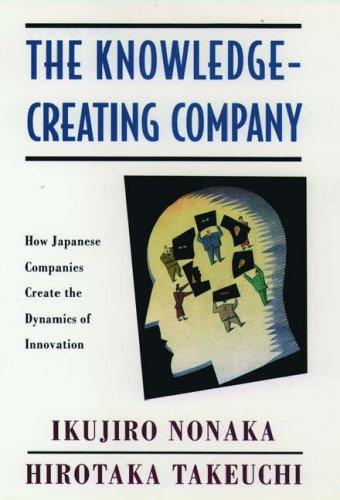
The knowledge-creating company
First published 1995 · 284 pages
A philosophical yet pragmatic deep dive into how organizations harness human experience to drive innovation.
What it feels like
Reading this book feels like sitting in on a masterclass that bridges the gap between ancient philosophy and modern corporate strategy. The pace is steady and deliberate, guiding the reader through a contemplative exploration of how human experience—tacit knowledge—can be transformed into tangible organizational success. It balances an intellectual, analytical tone with pragmatic case studies, shifting seamlessly from Zen Buddhism and Greek philosophy to the factory floors of Honda and Canon. The prose is authoritative and instructive, designed to challenge conventional Western management paradigms by elevating the role of metaphor and middle management. It will deeply satisfy business leaders, organizational theorists, and readers who appreciate a thoughtful, cross-cultural approach to communication, innovation, and the hidden mechanics of corporate triumph.
- Mood
- intellectual
- contemplative
- pragmatic
- Tone
- analytical
- authoritative
- philosophical
- instructive
- Pace
- steady
- Themes
- tacit vs. explicit knowledge · organizational communication · cross-cultural business practices · the philosophy of management · bridging ideals and reality
- The writing
- Clear and academic, seamlessly blending abstract philosophical concepts with concrete corporate case studies.
- The arc
- Moves from a broad philosophical exploration of human understanding to practical, grounded applications in organizational management.
- Who it's for
- Business leaders, management theorists, and anyone fascinated by the intersection of philosophy, culture, and corporate strategy.
About the book
Two leading Japanese business experts, Ikujiro Nonaka and Hirotaka Takeuchi, are the first to tie the performance of Japanese companies to their ability to create new knowledge and use it to produce successful products and technologies. In The Knowledge-Creating Company, Nonaka and Takeuchi provide an inside look at how Japanese companies go about creating this new knowledge organizationally.
The authors point out that there are two types of knowledge: explicit knowledge, contained in manuals and procedures, and tacit knowledge, learned only by experience, and communicated only indirectly, through metaphor and analogy. U.S. managers focus on explicit knowledge; the Japanese, on the other hand, focus on tacit knowledge. And this, the authors argue, is the key to their success - the Japanese have learned how to convert tacit into explicit knowledge.
To explain how this is done - and illuminate Japanese business practices as they do so - the authors range from Greek philosophy to Zen Buddhism, from classical economists to modern management gurus, illustrating the theory of organizational knowledge creation with case studies drawn from such firms as Honda, Canon, Matsushita, NEC, Nissan, 3M, GE, and even the U.S. Marines.
In addition, the authors show that, to create knowledge, the best management style is neither top-down nor bottom-up, but rather what they call "middle-up-down," in which the middle managers form a bridge between the ideals of top management and the chaotic realities of the frontline.
As we make the turn into the twenty-first century, a new society is emerging. Peter Drucker calls it the "knowledge society," one that is drastically different from the "industrial society," and one in which acquiring and applying knowledge will become key competitive factors. Nonaka and Takeuchi go a step further, arguing that creating knowledge will become the key to sustaining a competitive advantage in the future.
Because the competitive environment and customer preferences change constantly, knowledge perishes quickly. With The Knowledge-Creating Company, managers have at their fingertips years of insight from Japanese firms that reveal how to create new knowledge organizationally, and how to exploit it to make successful products, services, and systems.
Description from Open Library.
Books like The knowledge-creating company
See why they match The Toyota WayJeffrey K. LikerA masterclass in stripping away the unnecessary to reveal the quiet power of continuous, purposeful improvement.
 Lean thinkingJames P. WomackA pragmatic, clarifying blueprint for stripping away the unnecessary and building systems that actually work.
 The Practice of ManagementPeter F. DruckerA masterclass in organizational physics that transforms chaotic business challenges into structured, solvable problems.
 Out of the crisisW. Edwards DemingA rigorous, uncompromising blueprint for dismantling corporate dysfunction and building systems rooted in quality and human dignity.
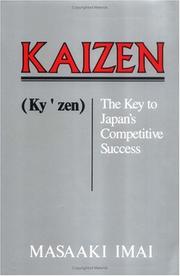 KaizenMasaaki ImaiA methodical and empowering exploration of how tiny, relentless changes can fundamentally transform complex systems.
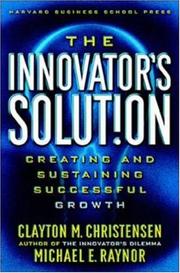 The Innovator's SolutionClayton M. ChristensenA focused, analytical guide that transforms the abstract challenge of business growth into a structured, actionable framework.