Books › The Last Man Who Knew Everything
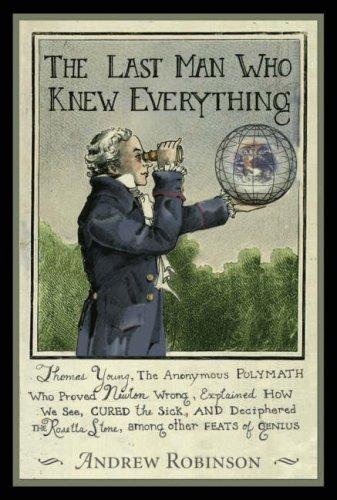
The Last Man Who Knew Everything
First published 2005 · 304 pages
An illuminating journey into the mind of a forgotten polymath whose boundless curiosity reshaped our understanding of the world.
What it feels like
Reading this biography feels like stepping into a sunlit, dust-moted study filled with ancient artifacts, optical prisms, and medical texts. It is a steady, deeply appreciative exploration of a mind that refused to be confined by a single discipline. The narrative balances the thrill of scientific discovery with the quiet dignity of a man who pursued knowledge for its own sake, rather than for fame. You will find yourself swept up in the sheer scale of his intellect, moving from the physics of light to the translation of the Rosetta Stone with seamless wonder. It is an intellectually stimulating and ultimately vindicating read, perfect for those who delight in the history of science and the boundless potential of human curiosity.
- Mood
- intellectually stimulating
- illuminating
- reflective
- awe-inspiring
- Tone
- admiring
- scholarly
- accessible
- earnest
- inquisitive
- Pace
- steady
- Themes
- the pursuit of knowledge · nature of genius · intellectual curiosity · historical vindication · interconnectedness of disciplines
- The writing
- Clear, engaging, and meticulously researched, balancing complex scientific explanations with compelling biographical narrative.
- The arc
- Moves from curiosity about a forgotten historical figure to profound awe at his boundless intellect, culminating in a satisfying sense of vindication.
- Who it's for
- Readers who love intellectual history and biographies of unsung geniuses whose curiosity knew no bounds.
Content notes
- academic rivalry
About the book
No one has given the polymath Thomas Young (1773–1829) the all-round examination he so richly deserves—until now. Celebrated biographer Andrew Robinson portrays a man who solved mystery after mystery in the face of ridicule and rejection, and never sought fame.
As a physicist, Young challenged the theories of Isaac Newton and proved that light is a wave. As a physician, he showed how the eye focuses and proposed the three-colour theory of vision, only confirmed a century and a half later. As an Egyptologist, he made crucial contributions to deciphering the Rosetta Stone. It is hard to grasp how much Young knew.
This biography is the fascinating story of a driven yet modest hero who cared less about what others thought of him than for the joys of an unbridled pursuit of knowledge—with a new foreword by Martin Rees and a new postscript discussing polymathy in the two centuries since the time of Young. It returns this neglected genius to his proper position in the pantheon of great scientific thinkers.
Description from Open Library.
Books like The Last Man Who Knew Everything
See why they match The strangest manGraham FarmeloAn illuminating journey into the brilliant, contradictory mind of one of modern science's most enigmatic figures.
 The age of wonderHolmes, RichardA sweeping, luminous journey into the minds of the dreamers and explorers who married poetry with the scientific method.
 The man who loved ChinaSimon WinchesterA sumptuous, globe-trotting biography that captures the thrill of intellectual obsession and the romance of uncovering a civilization's forgotten brilliance.
 Isaac NewtonJames GleickAn elegant, atmospheric plunge into the obsessive and brilliant mind that dragged humanity out of the dark ages and into the light of modern physics.
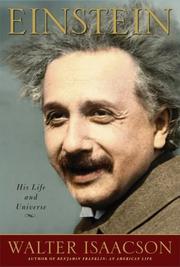 EinsteinWalter IsaacsonAn expansive, illuminating journey into the rebellious mind of a man who unlocked the universe while struggling with the gravity of his own human life.
 Newton and the counterfeiterThomas LevensonA legendary genius descends into the gritty underworld of seventeenth-century London to play a deadly game of cat-and-mouse.