Books › Prisoner's dilemma

Prisoner's dilemma
294 pages
A fascinating, slightly unsettling journey into the mathematical logic of human conflict and the brilliant minds that shaped the Cold War.
What it feels like
Reading this book feels like sitting in a smoke-filled room with mid-century strategists, watching the fate of the world being reduced to a mathematical matrix. It moves at a brisk, engaging pace, seamlessly weaving the tragic, brilliant life of John von Neumann with the high-stakes paranoia of the Cold War. The mood is intellectually thrilling yet underscored by a persistent, chilling dread as abstract puzzles of cooperation and betrayal are applied to nuclear brinkmanship. The prose is remarkably lucid, translating dense game theory into a gripping narrative without losing its nuance. It is perfect for readers who devour narrative non-fiction that bridges the gap between biography, history, and the terrifyingly rational logic of human conflict.
- Mood
- intellectually stimulating
- tense
- paranoid
- contemplative
- Tone
- analytical
- engaging
- ominous
- lucid
- objective
- Pace
- brisk
- Themes
- the ethics of logic · human conflict and cooperation · the shadow of nuclear annihilation · the limits of rationality · genius and tragedy
- The writing
- Clear, accessible, and narrative-driven, translating complex mathematical and historical concepts into compelling storytelling.
- The arc
- Moves from intellectual curiosity about a mathematical puzzle to a sobering realization of its terrifying real-world implications.
- Who it's for
- Readers who love narrative non-fiction that blends biography, history, and accessible science, particularly those fascinated by the Cold War or the philosophy of human behavior.
Content notes
- nuclear war anxiety
- terminal illness
- existential dread
About the book
Watching players bluff in a poker game inspired John von Neumann--father of the modern computer and one of the sharpest minds of the century--to construct game theory, a mathematical study of conflict and deception. Game theory was embraced at the RAND Corporation, the think tank charged with formulating military strategy for the atomic age, and in 1950 two RAND scientists discovered the "prisoner's dilemma"--A disturbing game where two or more people may betray the common good for individual gain. The prisoner's dilemma quickly became a popular allegory of the nuclear arms race. Game theory developed into a controversial tool of public policy--alternately accused of justifying arms races and touted as the only hope of preventing them. Biographer Poundstone weaves together a biography of the brilliant and tragic von Neumann, a history of pivotal phases of the cold war, and an investigation of game theory's far-reaching influence.--From publisher description.
Description from Open Library.
Books like Prisoner's dilemma
See why they match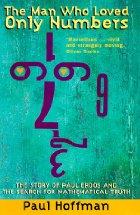 The Man Who Loved Only NumbersPaul HoffmanA warm, energetic portrait of a brilliant, chaotic mind that makes the abstract world of mathematics feel deeply human.
 Theory of games and economic behaviorJohn Von NeumannA monumental, intellectually demanding architecture of logic that reshapes how you perceive human decision-making.
 A mind at playJimmy Soni and Rob GoodmanA joyful, intellectually stimulating exploration of the eccentric genius who quietly laid the foundation for the entire digital age.
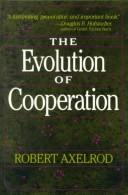 The evolution of cooperationRobert AxelrodA lucid, intellectually thrilling exploration that uses mathematics to prove why being nice is actually a winning strategy.
 Is God a mathematician?Mario LivioA contemplative journey through history and logic that asks whether the universe is fundamentally built on numbers.
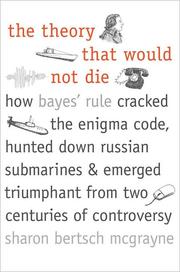 The Theory That Would Not DieSharon Bertsch McGrayneA thrilling intellectual detective story that transforms a single mathematical rule into a centuries-long tale of heresy, codebreaking, and ultimate vindication.