Books › The man who sold the moon
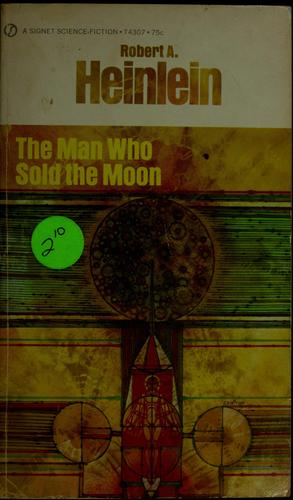
The man who sold the moon
378 pages
A sharp, boardroom-driven vision of space exploration where the greatest hurdles aren't the laws of physics, but the limits of funding and bureaucracy.
What it feels like
Reading this feels like sitting in on the ultimate high-stakes pitch meeting, where the product being sold is the future of humanity. The narrative moves at a brisk, dialogue-driven clip, trading the starry-eyed romanticism of space travel for the gritty, pragmatic realities of funding, engineering, and corporate maneuvering. It is steeped in a mid-century industrial mood, crackling with the relentless energy of a hyper-competent protagonist who refuses to take no for an answer. The prose is crisp and utilitarian, focusing on sharp banter and logistical problem-solving rather than poetic descriptions of the cosmos. It will deeply satisfy readers who love the nuts-and-bolts mechanics of big ideas, offering an experience that is both cynically capitalistic and profoundly, bittersweetly visionary.
- Mood
- ambitious
- industrial
- high-stakes
- visionary
- Tone
- pragmatic
- wry
- driven
- cynical yet idealistic
- Pace
- brisk
- Themes
- the logistics of dreams · capitalism and exploration · individual ambition · the triumph of engineering · the personal cost of legacy
- The writing
- Crisp, dialogue-heavy, and utilitarian, driven by sharp boardroom banter and mid-century American colloquialisms.
- The arc
- Begins with relentless, calculating ambition and culminates in a poignant, bittersweet reflection on the personal sacrifices required to change the world.
- Who it's for
- Readers who love the gritty, nuts-and-bolts logistics of big ideas and enjoy watching hyper-competent visionaries outmaneuver skeptics.
Content notes
- period-typical sexism
- corporate manipulation
About the book
In 1949, Heinlein wrote this story about an entrepreneur who foresaw that future of manned space flight could not be left to governments. His protagonist, D.D. Harriman, risked his reputation, his fortune and his very life to make his dream a reality. The prescience of Heinlein's tale is embodied in a modern-day entrepreneur, who looks beyond the moon to Mars. The future of humans in space cannot be trusted to governments, whose inefficiencies would make it impossible. Though almost seventy years old, this story is more pertinent today than ever.
Description from Open Library.
Books like The man who sold the moon
See why they match The moon is a harsh mistressRobert A. HeinleinA gritty, fast-talking tale of scrappy underdogs and a sentient computer engineering a high-stakes revolution.
 Expanded UniverseRobert Anson HeinleinA conversational, opinionated journey through the golden age of science fiction, guided by one of its most influential and outspoken architects.
 The past through tomorrowRobert A. HeinleinA sweeping, pragmatic chronicle of humanity's relentless push into the solar system, fueled by slide rules, grit, and boundless optimism.
 Time for the StarsRobert Anson HeinleinA bittersweet, star-spanning adventure that explores the emotional weight of relativity and the unbreakable bonds of family.
 The case for MarsRobert ZubrinA pragmatic, step-by-step blueprint that transforms interplanetary colonization from distant science fiction into an achievable near-term reality.
 Planet of the DamnedHarry HarrisonA gritty, ticking-clock race against planetary annihilation set on a relentlessly hostile world.