Books › The origin of Satan

The origin of Satan
270 pages
A fascinating, sobering archaeological dig into the human psyche and the theological origins of 'us versus them'.
What it feels like
Reading this book feels like sitting in a dimly lit, wood-paneled lecture hall with a brilliant professor who is gently dismantling everything you thought you knew about Western religion. The pace is steady and deliberate, guiding you through ancient texts with a lucid, accessible prose style that never gets bogged down in academic jargon. The mood is deeply intellectual but increasingly sobering, as the historical evolution of a theological concept reveals dark truths about human nature and our enduring need to demonize the 'other.' It is a revelatory experience, shifting from a fascinating historical inquiry into a profound meditation on the roots of prejudice. This is a must-read for anyone who loves peeling back the layers of cultural myths to expose the very human, often political, machinery operating beneath the sacred.
- Mood
- intellectual
- contemplative
- revelatory
- shadowy
- Tone
- scholarly
- objective
- inquisitive
- authoritative
- sobering
- Pace
- steady
- Themes
- demonization of the other · evolution of belief · in-group vs. out-group conflict · historical roots of prejudice · politics of theology
- The writing
- Lucid, erudite, and highly accessible, translating dense historical and theological scholarship into a compelling narrative.
- The arc
- Begins with intellectual curiosity about a cultural myth and deepens into a sobering reflection on the human tendency to demonize our enemies.
- Who it's for
- History buffs and recovering religionists who love peeling back the layers of sacred texts to reveal the deeply human, political motives beneath.
Content notes
- historical antisemitism
- religious persecution
- sectarian violence
About the book
Who is Satan in the New Testament, and what is the evil that he represents? In this groundbreaking book, Elaine Pagels, Princeton's distinguished historian of religion, traces the evolution of Satan from its origins in the Hebrew Bible, where Satan is at first merely obstructive, to the New Testament, where Satan becomes the Prince of Darkness, the bitter enemy of God and man, evil incarnate.
In The Origin of Satan, Pagels shows that the four Christian gospels tell two very different stories. The first is the story of Jesus' moral genius: his lessons of love, forgiveness, and redemption. The second tells of the bitter conflict between the followers of Jesus and their fellow Jews, a conflict in which the writers of the four gospels condemned as creatures of Satan those Jews who refused to worship Jesus as the Messiah.
Writing during and just after the Jewish war against Rome, the evangelists invoked Satan to portray their Jewish enemies as God's enemies too. As Pagels then shows, the church later turned this satanic indictment against its Roman enemies, declaring that pagans and infidels were also creatures of Satan, and against its own dissenters, calling them heretics and ascribing their heterodox views to satanic influences.
Description from Open Library.
Books like The origin of Satan
See why they match Adam, Eve, and the serpentElaine PagelsA paradigm-shifting historical excavation that reveals how early Christian politics invented the concept of original sin.
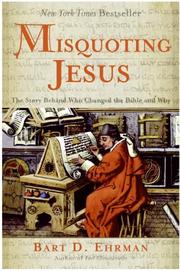 Misquoting JesusBart D. EhrmanA fascinating, accessible detective story that peels back the layers of history to reveal the deeply human fingerprints left on a sacred text.
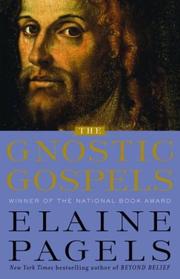 The gnostic GospelsElaine H. PagelsA luminous unearthing of buried spiritual histories that challenges the foundations of Western religious orthodoxy.
 God's ProblemBart D. EhrmanA deeply personal and intellectually rigorous exploration of the ultimate theological stumbling block: why we suffer.
 A history of GodKaren ArmstrongA sweeping, intellectually rigorous journey through four millennia of human attempts to understand and define the divine.
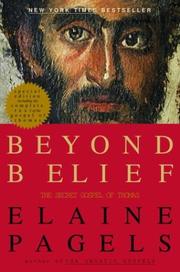 Beyond beliefElaine H. PagelsA poignant blend of memoir and historical detective work that unearths the lost spiritual possibilities of early Christianity.