Books › The science and engineering of materials

The science and engineering of materials
900 pages
A rigorous, methodical exploration of the microscopic structures that dictate the strength and behavior of the physical world.
What it feels like
Reading this book is an exercise in structured, methodical discovery, offering the deep satisfaction that comes from finally understanding the invisible forces holding the physical world together. The pace is necessarily steady, demanding focus as it builds complex concepts from foundational atomic structures up to macroscopic mechanical failures. The mood is distinctly academic and pragmatic, creating a quiet, focused atmosphere akin to a late-night study session in a university library. Its prose is precise and unadorned, designed entirely to clarify rather than to entertain, heavily supported by equations and diagrams. It will deeply satisfy engineering students and analytical minds who find beauty in structural integrity, rigorous problem-solving, and the mathematical predictability of the materials that build our modern world.
- Mood
- focused
- academic
- pragmatic
- structured
- Tone
- authoritative
- instructional
- objective
- analytical
- Pace
- steady
- Themes
- microscopic vs macroscopic · structural integrity · problem-solving · the physical world
- The writing
- Methodical, precise, and highly technical, prioritizing clarity and instructional progression over stylistic flourish.
- The arc
- The reader transitions from facing daunting technical complexity to achieving a satisfying, hard-won mastery of physical principles.
- Who it's for
- Engineering students and technically minded readers who crave a rigorous, foundational understanding of why materials behave the way they do.
About the book
Source title: The Science and Engineering of Materials: Solutions manual
Description from Open Library.
Books like The science and engineering of materials
See why they match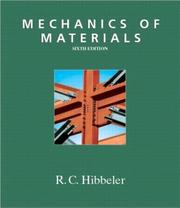 Mechanics of materialsR. C. HibbelerA rigorous, methodical journey into the invisible forces that hold the physical world together.
 Mechanics of materialsJames M. GereA rigorous, foundational exploration of the physical laws that keep the built world standing.
 Advanced mechanics of materialsRobert Davis CookA rigorous, methodical descent into the mathematical realities of physical stress and structural integrity.
 Manufacturing engineering and technologySerope KalpakjianA comprehensive, grounded exploration of the physical processes and materials that build the modern industrial world.
 Principles of electronic materials and devicesS. O. KasapA rigorous, structured journey into the microscopic physics that power our modern electronic world.
 Elements of strength of materialsStephen TimoshenkoA methodical, authoritative guide to understanding the physical limits and structural integrity of the materials that build our world.