Books › The Science of Interstellar

The Science of Interstellar
324 pages
A mind-expanding journey that bridges the gap between Hollywood spectacle and the awe-inspiring realities of theoretical physics.
What it feels like
Reading this book feels like sitting down with a brilliant, endlessly patient professor who just happens to have a Hollywood budget at his disposal. The pace is steady and deliberate, asking you to pause and stretch your imagination around concepts like time dilation, tesseracts, and spinning black holes. It carries a mood of cinematic wonder, blending the thrill of a blockbuster with the quiet, mind-expanding awe of deep astrophysics. The prose is remarkably accessible, stripping away impenetrable math in favor of clear, enthusiastic explanations and stunning visuals. It is a deeply satisfying experience for anyone who has ever looked up at the night sky, or a movie screen, and wondered how much of that magic is actually real.
- Mood
- mind-expanding
- cinematic
- wondrous
- intellectual
- Tone
- authoritative
- enthusiastic
- accessible
- awe-struck
- Pace
- steady
- Themes
- intersection of art and science · vastness of the cosmos · limits of human knowledge · theoretical physics
- The writing
- Clear, methodical, and deeply enthusiastic, translating dense mathematics into accessible, highly visual concepts.
- The arc
- Begins with curiosity about cinematic spectacle and deepens into profound awe at the actual physical laws governing our universe.
- Who it's for
- Armchair physicists, sci-fi enthusiasts, and movie buffs eager to peek behind the curtain of cinematic space travel to understand the real mechanics of the cosmos.
Content notes
- existential themes
About the book
"Interstellar, from acclaimed filmmaker Christopher Nolan, takes us on a fantastic voyage far beyond our solar system. Yet in The Science of Interstellar, Kip Thorne, the physicist who assisted Nolan on the scientific aspects of Interstellar, shows us that the movie's jaw-dropping events and stunning, never-before-attempted visuals are grounded in real science. Thorne shares his experiences working as the science adviser on the film and then moves on to the science itself. In chapters on wormholes, black holes, interstellar travel, and much more, Thorne's scientific insights many of them triggered during the actual scripting and shooting of Interstellar, describe the physical laws that govern our universe and the truly astounding phenomena that those laws make possible"
Description from Open Library.
Books like The Science of Interstellar
See why they match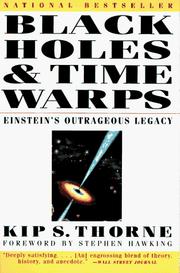 Black holes and time warpsKip S. ThorneA mind-expanding masterclass that makes the most bizarre phenomena in the universe feel thrillingly within your grasp.
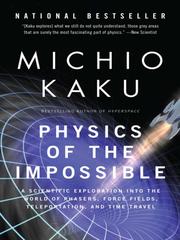 Physics of the ImpossibleMichio KakuA mind-expanding bridge between the wild imagination of science fiction and the rigorous frontiers of theoretical physics.
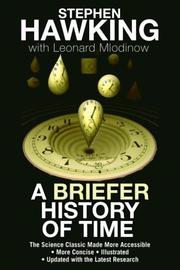 A Briefer History of TimeStephen Hawking; Leonard MlodinowA mind-expanding journey through the cosmos that makes the deepest mysteries of physics feel within your grasp.
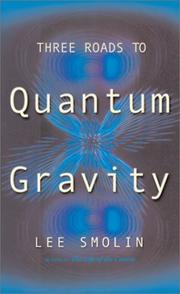 Three Roads to Quantum GravityLee SmolinAn awe-inspiring and deeply human journey to the very edge of our understanding of space, time, and reality.
 Reality Is Not What It SeemsCarlo RovelliA mind-expanding journey into the fundamental fabric of space, time, and reality itself.
 The theory of everythingSTEPHEN W. HAWKINGA mind-expanding journey to the very edges of human understanding, delivered with the clarity of a fireside chat.