Books › The Theory That Would Not Die

The Theory That Would Not Die
420 pages
A thrilling intellectual detective story that transforms a single mathematical rule into a centuries-long tale of heresy, codebreaking, and ultimate vindication.
What it feels like
Reading this book feels like uncovering a secret history of the modern world, hidden in plain sight within the realm of mathematics. It transforms what could be a dry statistical concept into a brisk, globe-trotting underdog story spanning centuries. The narrative is remarkably accessible, driven by a journalistic prose style that focuses on the eccentric personalities, bitter academic rivalries, and high-stakes historical crises—from breaking the Enigma code to modern DNA decoding—where this forbidden theorem was secretly deployed. The mood is deeply curious and ultimately triumphant, offering a satisfying intellectual journey. It will thoroughly delight fans of narrative science and history who love watching a marginalized, controversial idea slowly conquer the establishment to shape the way we understand reality.
- Mood
- intellectual
- curious
- illuminating
- triumphant
- Tone
- engaging
- enthusiastic
- accessible
- journalistic
- Pace
- brisk
- Themes
- triumph of pragmatism · evolution of knowledge · academic dogma vs innovation · hidden forces of history
- The writing
- Clear, journalistic, and narrative-focused, translating complex mathematical debates into accessible human drama.
- The arc
- The journey shifts from historical curiosity through the frustration of academic suppression to a deeply satisfying, world-changing vindication.
- Who it's for
- Curious non-fiction readers who love narrative science, the history of ideas, and stories of unsung heroes shaping the modern world.
Content notes
- academic rivalry
- historical warfare context
About the book
Bayes' rule appears to be a straightforward, one-line theorem: by updating our initial beliefs with objective new information, we get a new and improved belief. To its adherents, it is an elegant statement about learning from experience. To its opponents, it is subjectivity run amok. In the first-ever account of Bayes' rule for general readers, Sharon Bertsch McGrayne explores this controversial theorem and the human obsessions surrounding it. She traces its discovery by an amateur mathematician in the 1740s through its development into roughly its modern form by French scientist Pierre Simon Laplace. She reveals why respected statisticians rendered it professionally taboo for 150 years -- at the same time that practitioners relied on it to solve crises involving great uncertainty and scanty information, even breaking Germany's Enigma code during World War II, and explains how the advent of off-the-shelf computer technology in the 1980s proved to be a game-changer. Today, Bayes' rule is used everywhere from DNA de-coding to Homeland Security. Drawing on primary source material and interviews with statisticians and other scientists, The Theory That Would Not Die is the riveting account of how a seemingly simple theorem ignited one of the greatest controversies of all time. - Publisher.
Description from Open Library.
Books like The Theory That Would Not Die
See why they match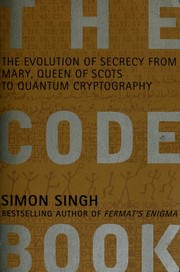 The Code BookSimon SinghA thrilling intellectual treasure hunt through history that reveals the invisible mathematical wars fought in the shadows.
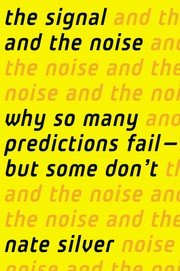 The Signal and the NoiseNate SilverA clear-eyed, intellectually humble journey through the chaotic world of data, teaching you how to spot the truth hidden in the static.
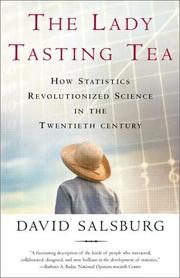 The Lady Tasting TeaDavid SalsburgAn illuminating journey through the intellectual breakthroughs and statistical theories that quietly reshaped modern scientific inquiry.
 The half-life of factsSamuel ArbesmanA reassuring and fascinating exploration of why what we know is always changing, and how to find comfort in the predictable rhythms of discovery.
 The Drunkard's WalkLeonard MlodinowA witty, mind-bending tour through the hidden mathematics of everyday life that will forever change how you view success, failure, and the illusion of control.
 The Book of WhyJudea Pearl and Dana MackenzieA mind-expanding journey into the mathematical architecture of reality and human reasoning.