Books › The Varieties of Scientific Experience

The Varieties of Scientific Experience
A Personal View of the Search for God
First published 2006 · 304 pages
A deeply intimate, awe-inspiring conversation about finding the sacred in the sheer vastness of the universe.
What it feels like
Reading this book feels like sitting under a canopy of stars with a brilliant, endlessly patient friend. Adapted from a series of lectures, the text unfolds at a steady, deliberate pace, inviting you to pause and marvel at the sheer scale of the cosmos. The mood is expansive and deeply contemplative, steeped in a rational wonder that feels almost religious in its reverence. Sagan's prose is characteristically lucid and poetic, translating complex astrophysics and theology into an intimate, accessible dialogue. It is an experience that moves from the humbling realization of our cosmic insignificance to a soaring, unifying awe. This is a perfect read for skeptics and seekers alike who want to explore profound existential questions without abandoning the rigors of science.
- Mood
- expansive
- awe-struck
- contemplative
- luminous
- Tone
- earnest
- reverent
- inquisitive
- rational
- compassionate
- Pace
- steady
- Themes
- intersection of science and spirituality · cosmic vastness · human humility · rational wonder · search for meaning
- The writing
- Lucid and conversational, blending rigorous scientific explanation with soaring, poetic reverence.
- The arc
- Begins with a humbling look at our tiny place in the cosmos and expands into a profound, unifying awe for the natural world.
- Who it's for
- Seekers, skeptics, and stargazers who crave a sense of spiritual wonder grounded firmly in scientific reality.
Content notes
- existential themes
- discussions of mortality
About the book
On the 10th anniversary of his death, brilliant astrophysisist and Pulitzer Prize winner Carl Sagan's prescient exploration of the relationship between religion and science and his personal search for God.Carl Sagan is considered one of the greatest scientific minds of our time. His remarkable ability to explain science in terms easily understandable to the layman in bestselling books such as Cosmos, The Dragons of Eden, and The Demon-Haunted World won him a Pulitzer Prize and placed him firmly next to Isaac Asimov, Stephen Jay Gould, and Oliver Sachs as one of the most important and enduring communicators of science. In December 2006 it will be the tenth anniversary of Sagan's death, and Ann Druyan, his widow and longtime collaborator, will mark the occasion by releasing Sagan's famous "Gifford Lectures in Natural Theology," The Varieties of Scientific Experience: A Personal View of the Search for God.The chance to give the Gifford Lectures is an honor reserved for the most distinguished scientists and philosophers of our civilization. In 1985, on the grand occasion of the centennial of the lectureship, Carl Sagan was invited to give them. He took the opportunity to set down in detail his thoughts on the relationship between religion and science as well as to describe his own personal search to understand the nature of the sacred in the vastness of the cosmos.The Varieties of Scientific Experience, edited, updated and with an introduction by Ann Druyan, is a bit like eavesdropping on a delightfully intimate conversation with the late great astronomer and astrophysicist. In his charmingly down-to-earth voice, Sagan easily discusses his views on topics ranging from manic depression and the possibly chemical nature of transcendance to creationism and so-called intelligent design to the likelihood of intelligent life on other planets to the likelihood of nuclear annihilation of our own to a new concept of science as "informed worship." Exhibiting a breadth of intellect nothing short of astounding, he illuminates his explanations with examples from cosmology, physics, philosophy, literature, psychology, cultural anthropology, mythology, theology, and more. Sagan's humorous, wise, and at times stunningly prophetic observations on some of the greatest mysteries of the cosmos have the invigorating effect of stimulating the intellect, exciting the imagination, and reawakening us to the grandeur of life in the cosmos.
Description from Open Library.
Books like The Varieties of Scientific Experience
See why they match Billions and billionsCarl SaganA bittersweet, awe-inspiring gaze into the cosmos that ultimately turns its compassionate lens back onto the fragile beauty of human life.
 Pale Blue DotCarl SaganA poetic and humbling gaze into the vastness of the cosmos that makes our tiny world feel infinitely precious.
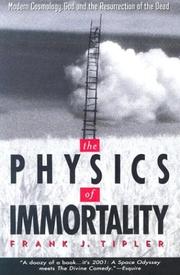 The Physics of ImmortalityFrank J. TiplerA dizzying, audacious leap from the rigorous equations of quantum mechanics to the ultimate resurrection of humanity.
 The Language of GodFrancis S. CollinsA warm, intellectually rigorous invitation to see the universe as both a masterpiece of physics and a canvas of divine intention.
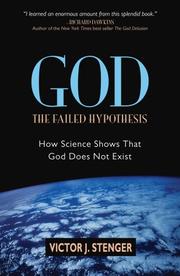 GodVictor J. StengerA methodical, science-driven examination that treats the divine as a testable hypothesis.
 The Meaning of It AllRichard P. FeynmanSitting in a lecture hall with a brilliant, eccentric professor who has decided to scrap the syllabus and just talk about life.