Books › Think
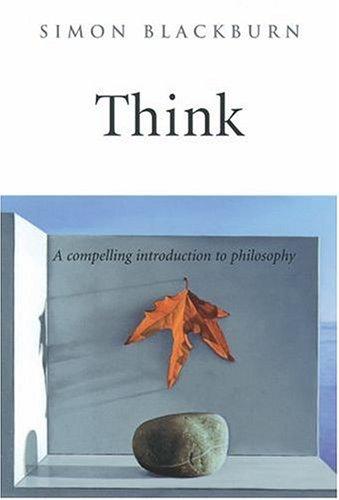
Think
A Compelling Introduction to Philosophy
First published 1999 · 320 pages
A clarifying plunge into the deep end of human thought that leaves you looking at the everyday world with fresh, questioning eyes.
What it feels like
Reading this book feels like sitting in a sunlit office with a brilliant, patient professor who genuinely respects your intelligence. It moves at a steady, deliberate pace, asking you to pause frequently and wrestle with the unsettling vertigo of its thought experiments. The mood is deeply contemplative and inquisitive, stripping away the comfortable assumptions of everyday life to reveal the complex architecture of human thought beneath. Rather than drowning you in the history of dead thinkers, the crisp, elegant prose focuses on the living mechanics of the ideas themselves—knowledge, free will, and reality. It is a clarifying, intellectually empowering experience designed for curious minds who want to learn not just what philosophers thought, but how to actually think.
- Mood
- contemplative
- inquisitive
- clarifying
- vertiginous
- Tone
- lucid
- conversational
- rigorous
- encouraging
- Pace
- steady
- Themes
- the architecture of thought · questioning the obvious · the limits of knowledge · the nature of reality · intellectual self-defense
- The writing
- Crisp, elegant, and remarkably clear, relying on vivid thought experiments rather than dense academic jargon.
- The arc
- Begins with the unsettling vertigo of doubting everyday reality, gradually building toward an empowering clarity about how to structure our own thinking.
- Who it's for
- Curious, intellectually hungry readers who want a serious but approachable guide to the biggest questions of human existence.
Content notes
- mild existential dread
About the book
PERHAPS THE MOST unsettling thought many of us have, often quite early on in childhood, is that the whole world might be a dream; that the ordinary scenes and objects of everyday life might be fantasies.
Description from Open Library.
Books like Think
See why they match The great conversationNorman MelchertAn invitation to pull up a chair and listen to the greatest minds in history argue, agree, and build upon each other's ideas.
 101 philosophy problemsCohen, MartinA playful, bite-sized journey through the history of ideas that turns complex ethical dilemmas into engaging thought experiments.
 Introduction to mathematical philosophyBertrand RussellAn intellectual exploration that peels back the familiar layers of numbers to reveal the philosophical bedrock beneath.
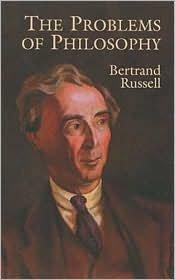 The Problems of PhilosophyBertrand RussellA crisp, mind-expanding journey that dismantles your everyday assumptions and rebuilds your understanding of reality from the ground up.
 The pig that wants to be eatenJulian BagginiA brisk, brain-teasing journey through one hundred philosophical puzzles that challenge how you see the world.
 MathematicsTimothy GowersA patient, mind-expanding glimpse into the elegant, abstract world of advanced mathematics.