Books › Thinking in Java

Thinking in Java
First published 1998 · 1482 pages
A deep, philosophical dive into the mechanics and mindset of object-oriented programming that transforms how you think about code.
What it feels like
Reading this feels like sitting in a masterclass with a patient, brilliant mentor who cares more about your conceptual understanding than just getting the code to compile. The pace is steady and deliberate, demanding focus but rewarding it with profound moments of clarity. Eckel’s prose is unusually articulate and philosophical for a technical manual, stripping away the mystery of object-oriented design to reveal the elegant logic underneath. The mood is deeply focused and illuminating, creating an atmosphere of intellectual growth and structural appreciation. It delights developers who crave the 'why' behind the 'how,' offering a transformative journey from mere syntax memorization to true architectural mastery. You don't just learn a language; you learn a new way to think.
- Mood
- focused
- illuminating
- structured
- academic
- Tone
- authoritative
- encouraging
- philosophical
- precise
- intellectual
- Pace
- steady
- Themes
- object-oriented philosophy · conceptual mastery · software architecture · problem-solving mindset
- The writing
- Clear, articulate, and unusually philosophical, prioritizing deep understanding over quick fixes.
- The arc
- Moves from the overwhelming complexity of a new paradigm to the satisfying clarity of deep conceptual mastery.
- Who it's for
- Developers who want to understand the underlying 'why' of object-oriented programming rather than just memorizing syntax.
About the book
“Thinking in Java should be read cover to cover by every Java programmer, then kept close at hand for frequent reference. The exercises are challenging, and the chapter on Collections is superb! Not only did this book help me to pass the Sun Certified Java Programmer exam; it’s also the first book I turn to whenever I have a Java question.” —Jim Pleger, Loudoun County (Virginia) Government
“Much better than any other Java book I’ve seen. Make that ‘by an order of magnitude’.... Very complete, with excellent right-to-the-point examples and intelligent, not dumbed-down, explanations.... In contrast to many other Java books I found it to be unusually mature, consistent, intellectually honest, well-written, and precise. IMHO, an ideal book for studying Java.” —Anatoly Vorobey, Technion University, Haifa, Israel
“Absolutely one of the best programming tutorials I’ve seen for any language.” —Joakim Ziegler, FIX sysop
“Thank you again for your awesome book. I was really floundering (being a non-C programmer), but your book has brought me up to speed as fast as I could read it. It’s really cool to be able to understand the underlying principles and concepts from the start, rather than having to try to build that conceptual model through trial and error. Hopefully I will be able to attend your seminar in the not-too-distant future.” —Randall R. Hawley, automation technician, Eli Lilly & Co.
“This is one of the best books I’ve read about a programming language.... The best book ever written on Java.” —Ravindra Pai, Oracle Corporation, SUNOS product line
“Bruce, your book is wonderful! Your explanations are clear and direct. Through your fantastic book I have gained a tremendous amount of Java knowledge. The exercises are also fantastic and do an excellent job reinforcing the ideas explained throughout the chapters. I look forward to reading more books written by you. Thank you for the tremendous service that you are providing by writing such great books. My code will be much better after reading Thinking in Java. I thank you and I’m sure any programmers who will have to maintain my code are also grateful to you.” - Yvonne Watkins, Java artisan, Discover Technologies, Inc.
Description from Open Library.
Books like Thinking in Java
See why they match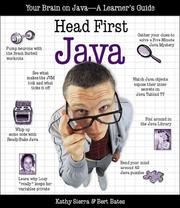 Head first JavaKathy SierraA chaotic, highly visual, and deeply effective rollercoaster ride through object-oriented programming that tricks your brain into learning.
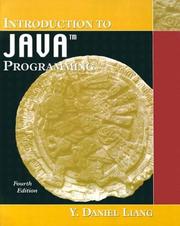 Introduction to Java ProgrammingY. Daniel LiangA structured, methodical journey from a blank screen to compiling code, offering the quiet satisfaction of mastering complex logic.
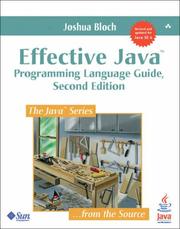 Effective JavaJoshua BlochA masterclass in writing code that is not just functional, but elegant, robust, and deeply professional.
 Objects first with JavaDavid J. Barnes and Michael KollingA structured, methodical journey into the foundational principles of object-oriented programming.
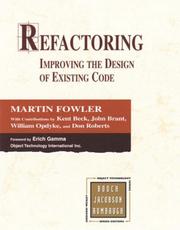 RefactoringMartin FowlerA pragmatic masterclass in transforming chaotic, tangled systems into elegant, maintainable architecture through small, deliberate steps.
 Think PythonAllen B. DowneyA patient, hands-on guide that transforms the intimidating world of coding into a series of clear, solvable puzzles.