Books › Upheaval

Upheaval
1984 pages
A sobering, wide-lens examination of how nations navigate the brink of disaster, viewed through the psychological lens of personal trauma.
What it feels like
Reading this book feels like sitting in a high-level geopolitical briefing that slowly morphs into a sobering psychological evaluation of the modern world. The pace is steady and methodical, guiding the reader through a sweeping comparative analysis of historical disasters and national resilience. The mood is deeply contemplative, tinged with an apprehensive edge as the narrative draws parallels between individual trauma recovery and a country's ability to survive political, economic, and ecological devastation. The prose is analytical and structured, breaking down complex global events into digestible lessons. It is a compelling read for those who devour macro-history and social science, offering a cautionary but fascinating lens on how societies either adapt to catastrophic change or fail to learn from their past.
- Mood
- contemplative
- apprehensive
- intellectual
- Tone
- analytical
- sobering
- comparative
- cautionary
- Pace
- steady
- Themes
- national crisis and resilience · historical trauma · societal change · lessons from history · collective coping mechanisms
- The writing
- Methodical and investigative, structuring complex historical and psychological concepts into accessible, comparative frameworks.
- The arc
- Moves from a broad curiosity about historical survival to a sobering realization about modern societal vulnerabilities.
- Who it's for
- Readers who enjoy sweeping historical analyses and applying psychological frameworks to macro-level geopolitical issues.
Content notes
- political instability
- national crises
- societal collapse discussions
About the book
Upheaval: How Nations Cope with Crisis and Change is a 2019 nonfiction book by American scientist Jared Diamond. Diamond attempts to analyze devastating crises (political, economic, civil, ecological, etc.) that may destroy whole countries and the multiple reasons causing them. To support his analysis with real-world examples, Diamond investigates past crises that have hit such countries as Finland, Japan, Chile, Indonesia, Germany, Australia, and the United States. Diamond also tries to understand the ways in which individuals learn to cope with personal traumas and how these approaches can be applied to nations. His unexpected conclusion is that individuals do learn from crisis but countries seldom do. He also concludes that the United States is a country in which crises are getting worse.
Description from Open Library.
Books like Upheaval
See why they match CollapseJared M. DiamondA sweeping, sobering autopsy of fallen civilizations that holds a mirror up to our own precarious future.
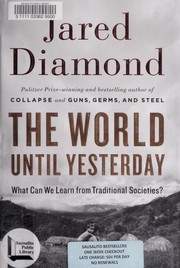 The world until yesterdayJared DiamondA sweeping, reflective journey that holds up a mirror to modern life by examining the traditional societies we left behind.
 Guns, germs, and steelJared M. DiamondA sweeping, structural lens that reframes the entire history of human civilization through the unforgiving realities of geography and environment.
 21 Lessons for the 21st CenturyYuval Noah HarariA clarifying, panoramic sweep of the modern world's most urgent anxieties, offering a steadying hand in an age of information overload.
 The fourth turningWilliam Strauss; Neil HoweA sweeping, prophetic framework that makes the chaos of modern history feel both terrifyingly inevitable and deeply orderly.
 The Uninhabitable EarthDavid Wallace-WellsA relentless, white-knuckled plunge into the terrifying realities of our climate future that demands you look away from nothing.