Books › A theory of justice
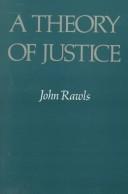
A theory of justice
First published 1971 · 986 pages
A rigorous, monumental thought experiment that challenges you to rebuild society from scratch behind a veil of ignorance.
What it feels like
Reading this monumental work of political philosophy is a deeply cerebral and methodical experience. The pace is steady and deliberate, asking you to slow down and engage with its rigorous, step-by-step logical architecture. There is a profound earnestness to the text—an underlying optimism about human rationality and our capacity to design a fair society. The atmosphere is purely intellectual, stripping away the noise of contemporary politics to place you in a quiet, abstract space of pure thought. The prose is dense and academic, demanding careful attention, but it rewards the effort with a breathtakingly cohesive vision of justice. It is a must-read for deep thinkers, policy nerds, and anyone who wants to grapple with the moral foundations of equality and human cooperation.
- Mood
- intellectual
- contemplative
- serious
- Tone
- academic
- earnest
- methodical
- rigorous
- Pace
- steady
- Themes
- fairness and equality · the social contract · moral duty · distributive justice · foundations of society
- The writing
- Dense, analytical, and highly structured, prioritizing logical progression and clarity over stylistic flourish.
- The arc
- Moves from a state of rigorous conceptual abstraction to a grounded, hopeful vision of a cooperative human society.
- Who it's for
- Students of philosophy and deep thinkers who enjoy grappling with the moral and structural foundations of society.
About the book
The principles of justice Rawls set forth in this book are those that free and rational people would accept in an initial position of equality. In this hypothetical situation, which corresponds to the state of nature in social contract theory, no one knows his or her place in society; his or her class position or social status; his or her fortune in the distribution of natural assets and abilities; his or her intelligence, strength, and the like; or even his or her conception of the good. Thus, deliberating behind a veil of ignorance, people determine their rights and duties. The first section of A Theory of Justice addresses objections to the theory and discusses alternative positions, especially utilitarianism. Rawls then applies his theory to the philosophical basis of constitutional liberties, the problem of distributive justice, and the grounds and limits of political duty and obligation. He includes here a discussion of civil disobedience and conscientious objection. Finally, he connects his theory of justice with a doctrine of the good and of moral development. This enables him to formulate a conception of society as a social union of social unions, and to use his theory of justice to explain the values of community. Since its first appearance in 1971, A Theory of Justice has been continuously taught and debated, and translated into twenty-four languages. This revised edition includes changes, discussed in the preface, which Rawls considered to be significant, especially to the discussions of liberty and primary social goods. - Back cover.
Description from Open Library.
Books like A theory of justice
See why they match JusticeMichael SandelA stimulating intellectual workout that transforms abstract philosophy into urgent, everyday moral questions.
 Anarchy, State, and UtopiaRobert NozickA lively, provocative intellectual obstacle course that uses vivid thought experiments to challenge the foundations of state power.
 UtilitarianismJohn Stuart MillA rigorous, foundational exploration of what it means to live a good life and build a just society based on the maximization of human happiness.
 Epistemic injusticeMiranda FrickerA paradigm-shifting philosophical framework that finally gives a name to the invisible ways power dictates whose voice is believed.
 Political theoryAndrew HeywoodA clarifying, accessible journey through the complex ideas that govern human societies and shape our political reality.
 The Subjection of WomenJohn Stuart MillA methodical, impassioned dismantling of patriarchal logic that feels as urgent today as it did in the nineteenth century.