Books › De civitate Dei

De civitate Dei
First published 1941 · 13338 pages
A sweeping, foundational journey through early Christian theology that transforms a defense against historical blame into a monumental synthesis of faith and philosophy.
What it feels like
Reading this foundational text feels like stepping into the mind of a towering historical intellect as he grapples with the collapse of an empire. The pace is steady and deliberate, guided by a fluent translation that carefully unpacks dense theological and philosophical arguments. It carries a serious, contemplative mood, shifting from an earnest defense against historical blame to a sweeping, authoritative critique of moral and political traditions. The prose is precise and scholarly, demanding the reader's full attention as it weaves Platonism together with early Christian thought. It is an experience tailored for readers who delight in the deep roots of Western intellectual history and the profound, enduring questions of faith, society, and the human condition.
- Mood
- contemplative
- serious
- reverent
- scholarly
- Tone
- authoritative
- intellectual
- critical
- philosophical
- earnest
- Pace
- steady
- Themes
- defense of faith · moral critique of society · synthesis of philosophy and religion · social and political relations
- The writing
- Fluent and authoritative, presenting complex theological and philosophical arguments with detailed precision.
- The arc
- Moves from a defensive posture regarding historical tragedy to a sweeping, transcendent vision of spiritual and political life.
- Who it's for
- Readers fascinated by early Christian theology, Western intellectual history, and the intersection of Platonism and religious thought.
Content notes
- historical tragedy
- moral critique
About the book
This is the first new rendition for a generation of The City of God, the first major intellectual achievement of Latin Christianity and one of the classic texts of Western civilisation. When he began to write The City of God in 413, St. Augustine's intention was to defend the Christian Church against the charge of having brought about the Sack of Rome in 410.
Outgrowing this initial purpose, the work evolved into a detailed critique of the political and moral tradition of Rome and a synthesis of Platonism and Christianity which must stand as one of the most significant achievements in Western intellectual history. Apart from its intrinsic interest the Christian account of social and political relations which Augustine gives was to furnish one of the most fertile sources of material for the controversial literature of the middle ages. R. W.
Dyson has produced a complete, accurate, authoritative and fluent translation of The City of God, edited together with full biographical notes, a concise introduction, bibliographical note and chronology of Augustine's life.
Description from Open Library.
Books like De civitate Dei
See why they match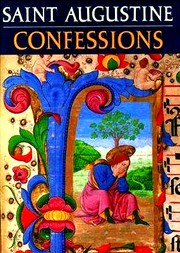 ConfessionsAugustineAn intimate, centuries-old prayer that wrestles with the deepest questions of memory, desire, and the search for the divine.
 Enarrationes in PsalmosAugustine of HippoA sweeping, deeply pastoral journey through human emotion and divine grace, anchored in ancient spiritual song.
 Meditationes de prima philosophiaRené DescartesA quiet, solitary descent into radical doubt that attempts to rebuild the entire universe from a single point of absolute certainty.
 De rerum naturaTitus Lucretius CarusA majestic, poetic dismantling of existential dread that finds profound serenity in the atomic nature of the universe.
 Summa TheologicaThomas AquinasA monumental cathedral of thought that invites you to explore the divine through the rigorous lens of absolute logic.
 History of the Decline and Fall of the Roman Empire Complete and UnabridgedEdward GibbonA majestic, deeply ironic chronicle of a civilization's slow and inevitable decay.