Books › Dieu et l’État
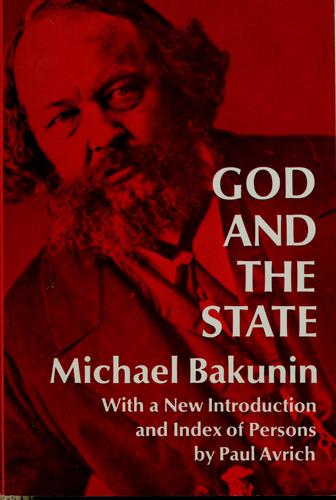
Dieu et l’État
First published 1977 · 245 pages
A fierce, unfinished philosophical manuscript that dismantles the intertwined authorities of religion and the state.
What it feels like
Reading this foundational anarchist text feels like stepping into a fiercely intellectual and confrontational debate. The mood is rebellious and uncompromising, driven by a brisk, polemical pace that relentlessly critiques both Christianity and burgeoning technocracy. As an unfinished manuscript, it carries a raw, urgent energy, moving from a systematic deconstruction of religious and state authority to a passionate defense of individual liberty and materialism. The prose, noted for being poeticized in early French editions before later translations sought stricter fidelity, remains forceful and philosophically dense. It is an intellectually charged experience designed for readers who devour controversial literature, foundational political philosophy, and unapologetic arguments against the historical structures of power and dogma.
- Mood
- intellectually charged
- rebellious
- confrontational
- Tone
- critical
- polemical
- defiant
- uncompromising
- Pace
- brisk
- Themes
- anti-authoritarianism · materialist philosophy · individual liberty · critique of religion · rejection of technocracy
- The writing
- Forceful and philosophically dense, carrying the raw urgency of an unfinished manuscript that was famously poeticized in its early French translations.
- The arc
- Moves from a fierce deconstruction of religious and state authority to a passionate defense of individual and materialist freedom.
- Who it's for
- Readers drawn to foundational anarchist philosophy, materialist critiques of religion, and uncompromising political theory.
Content notes
- anti-religious sentiment
- controversial political theory
About the book
God and the State (called by its author The Historical Sophisms of the Doctrinaire School of Communism) is an unfinished manuscript by the Russian anarchist philosopher Mikhail Bakunin, published posthumously in 1882. The work criticises Christianity and the then-burgeoning technocracy movement from a materialist, anarchist and individualist perspective. Early editions contained rewrites by Carlo Cafiero and Élisée Reclus in order to make the work more poetic in the translated French and due to misreadings, but later translations have attempted to remain more faithful to the original text. It has gone on to become Bakunin's most widely read and praised work.
Description from Open Library.
Books like Dieu et l’État
See why they match The Kingdom of God Is Within YouTolstoy, LeoA fierce, uncompromising manifesto that strips away institutional dogma to locate the divine in radical, nonviolent individual action.
 Der Einzige und sein EigentumCarroll, John (Editor)A fiery, uncompromising dismantling of every societal sacred cow in pursuit of absolute, radical self-ownership.
 Twilight of the Idols and The AntichristFriedrich Wilhelm NietzscheA blistering, hammer-swinging assault on everything you thought was sacred, true, or good.
 La conquête du painPeter KropotkinA passionate, foundational blueprint for a world built on mutual care rather than exploitation.
 God is not greatChristopher HitchensA blistering, erudite polemic that dismantles dogma with razor-sharp wit and unapologetic intellectual fire.
 Why I am not a ChristianRussell BertrandA masterclass in elegant dismantling, offering a cool, clear-eyed defense of intellectual freedom over inherited dogma.