Books › Forged
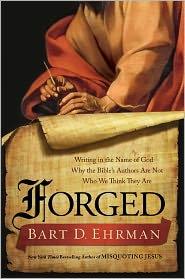
Forged
320 pages
An investigative journey into the ancient world that unravels the hidden scandals behind the authorship of sacred texts.
What it feels like
Reading this book feels like stepping into the shoes of a historical detective uncovering a centuries-old cover-up. The narrative moves at a brisk, investigative pace, stripping away popular myths to reveal the scandalous forgery battles that raged across the ancient Roman Empire. The tone is authoritative yet highly provocative, inviting the reader to question deeply held assumptions about religious authority and the origins of sacred texts. Rather than a dry academic treatise, the prose reads like an exposé, making complex historical and textual criticism accessible and intellectually thrilling. It is a perfect fit for readers who crave rigorous historical inquiry and are not afraid to confront the controversial realities behind the construction of the Bible.
- Mood
- intellectually stimulating
- inquisitive
- scandalous
- Tone
- investigative
- authoritative
- provocative
- scholarly
- Pace
- brisk
- Themes
- historical deception · religious authority · the nature of authorship · myth versus reality
- The writing
- Accessible yet rigorously researched, presenting complex historical arguments with the clarity of an investigative exposé.
- The arc
- Moves from unquestioned assumptions to a startling realization of historical deception, ending in a profound reevaluation of religious texts.
- Who it's for
- Readers fascinated by biblical history, religious controversies, and the hidden origins of sacred texts.
Content notes
- challenges to biblical authority
- religious deconstruction
About the book
"In FORGED author, Bart Ehrman, reveals another hidden scandal of the Bible. For centuries, scholars have known that not all of the books in the New Testament are authentic while the general public has been blissfully unaware. The books of the New Testament are widely assumed to be written accounts of Jesus's life by those who knew him best. However, if the Gospels and letters were not written by memebers of Jesus's inner circle--but by later writers with differing agendas in rival communitites--then the authority of the Bible collapses. Based on new, original research, Ehrman takes the reader on a journey to the ancient world and the forgery battles that raged throughout the Roman Empire. The popular myth is that "writing in the name of another" was a common, accepted practice in antiquity. Not so argues Ehrman. Forgery was as scandalous then as it is now. And yet, at a time when all documents and letters where copied by hand and circulated freely with little or no authorial control, identifying who actually penned a piece of writing-be it political, historical, or religious-was fraught with uncertainty. FORGED exposes the forged letters written in the name of Jesus's disciples for the expressed purpose of gaining acceptance in the early church...which is exactly what happened and why we have the Bible we read today"--
Description from Open Library.
Books like Forged
See why they match Jesus, InterruptedBart D. EhrmanA conversational, paradigm-shifting peek behind the curtain of biblical scholarship that systematically dismantles Sunday school certainties.
 Misquoting JesusBart D. EhrmanA fascinating, accessible detective story that peels back the layers of history to reveal the deeply human fingerprints left on a sacred text.
 Jesus for the Non-ReligiousJohn Shelby SpongA provocative and earnest dismantling of religious superstition to uncover a deeply human, revolutionary spiritual figure.
 Who Wrote the Bible?Richard Elliott FriedmanA historical detective story that peels back the layers of the world's most famous text to reveal the very human rivalries that shaped it.
 Reading the Bible Again For the First TimeMarcus J. BorgA gentle, intellectually rigorous invitation to rediscover sacred texts through the lens of metaphor and historical context rather than rigid literalism.
 The origin of SatanElaine PagelsA fascinating, sobering archaeological dig into the human psyche and the theological origins of 'us versus them'.