Books › The Mind's I
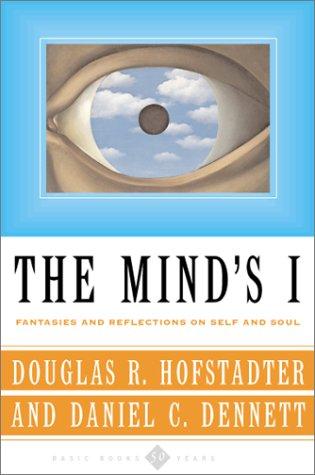
The Mind's I
Fantasies and Reflections on Self and Soul
600 pages
A dizzying, playful funhouse mirror of thought experiments that will make you question the very nature of your own existence.
What it feels like
Reading this collection feels like wandering through an intellectual funhouse where the mirrors reflect not your body, but your very sense of self. It is a deeply cerebral and playful experience, blending the rigorous logic of cognitive science with the imaginative leaps of speculative fiction. The pace is leisurely, demanding that you pause frequently to stare at the wall and process the existential vertigo it induces. Hofstadter and Dennett act as witty, provocative tour guides, offering conversational commentary that bridges dense philosophical arguments and lyrical stories. It is a dizzying, wondrous journey designed for the endlessly curious—readers who delight in paradoxes, thought experiments, and the thrilling, slightly terrifying realization that the mind is a profound mystery.
- Mood
- mind-bending
- contemplative
- dizzying
- cerebral
- wondrous
- Tone
- playful
- inquisitive
- provocative
- analytical
- witty
- Pace
- leisurely
- Themes
- the illusion of self · artificial consciousness · the mind-body problem · subjective experience · existential paradoxes
- The writing
- A kaleidoscopic mix of lyrical fiction, rigorous philosophical argumentation, and conversational, witty editorial commentary.
- The arc
- Begins with intellectual curiosity, deepens into profound existential vertigo, and settles into a lingering sense of awe at the mystery of consciousness.
- Who it's for
- Intellectually restless readers who love thought experiments, paradoxes, and the blurry intersection of science, philosophy, and speculative fiction.
Content notes
- existential dread
About the book
With contributions from Jorge Luis Borges, Richard Dawkins, John Searle, and Robert Nozick, The Mind's I explores the meaning of self and consciousness through the perspectives of literature, artificial intelligence, psychology, and other disciplines. In selections that range from fiction to scientific speculations about thinking machines, artificial intelligence, and the nature of the brain, Hofstadter and Dennett present a variety of conflicting visions of the self and the soul as explored through the writings of some of the twentieth century's most renowned thinkers.
Description from Open Library.
Books like The Mind's I
See why they match I Am a Strange LoopDouglas R. HofstadterA mind-bending, deeply personal journey into the architecture of consciousness that reveals how we live on inside the minds of those we love.
 Consciousness explainedDaniel C. DennettA witty, relentless dismantling of the ghost in the machine that will leave you questioning who is actually doing the reading.
 From Bacteria to Bach and Back: The Evolution of MindsDaniel C. DennettA sweeping, cerebral exploration of how mindless biological processes gave rise to the breathtaking complexity of human consciousness.
 Gödel, Escher, BachDouglas R. HofstadterA dizzying, playful labyrinth of logic, art, and music that fundamentally rewires how you think about thinking.
 The society of mindVoyager CompanyA playful, mind-bending puzzle box that dismantles the illusion of the self to reveal the hidden machinery of thought.
 Philosophy of MindDavid J. ChalmersA rigorous, brain-bending expedition into the very nature of thought, awareness, and what it means to experience the world.