Books › How we think

How we think
a restatement of the relation of reflective thinking to the educative process
320 pages
A rigorous, foundational exploration of how the human mind wrestles with problems and constructs meaning.
What it feels like
Reading this foundational text feels like sitting in a quiet, sunlit study with a brilliant, uncompromising mentor. The pace is steady and deliberate, demanding that you slow down and weigh each sentence. It is not a book that washes over you; rather, it requires active, reflective engagement, mirroring the very cognitive processes it describes. The mood is deeply intellectual and contemplative, steeped in an earnest belief in the power of education to shape a better society. The prose is formal and dense, characteristic of early twentieth-century philosophy, yet it rewards the patient reader with profound clarity. It will delight educators, cognitive psychologists, and lifelong learners who crave a rigorous, structural understanding of how curiosity transforms into disciplined, critical thought.
- Mood
- contemplative
- intellectual
- structured
- Tone
- analytical
- instructive
- earnest
- philosophical
- Pace
- steady
- Themes
- the mechanics of thought · purpose of education · intellectual discipline · cultivating curiosity
- The writing
- Formal, dense, and meticulously precise, demanding careful attention to unpack its early twentieth-century academic phrasing.
- The arc
- Moves from a state of unexamined assumption to a structured, enlightened appreciation of reflective thought.
- Who it's for
- Educators, philosophers, and deep thinkers who want to understand the fundamental cognitive processes behind learning and teaching.
About the book
Microfilm. Washington, D.C.: Library of Congress Photoduplication Service, 1984. 1 microfilm reel; 35 mm. Call number of original: BF455.D5. Master microform held by: DLC.
Description from Open Library.
Books like How we think
See why they match The Nature of the Physical WorldArthur Stanley EddingtonA cerebral exploration of reality that bridges the gap between hard physics and the philosophy of knowledge.
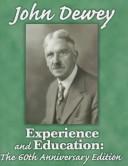 Experience and educationJohn DeweyA concise, intellectually rigorous meditation on how genuine learning is rooted in lived experience.
 Democracy and EducationJohn DeweyA rigorous, idealistic blueprint for how active, experiential learning can build a more just and vibrant society.
 The development of the dramaBrander MatthewsAn archival deep dive into the historical evolution and critical analysis of theatrical arts.
 The developmental psychology of Jean PiagetJohn H. FlavellA rigorous, foundational deep-dive into the architecture of the growing mind.
 Philosophical foundations of educationHoward OzmonA structured, deeply intellectual exploration of the ideas that have shaped classrooms and minds throughout history.