Books › Infinite Powers
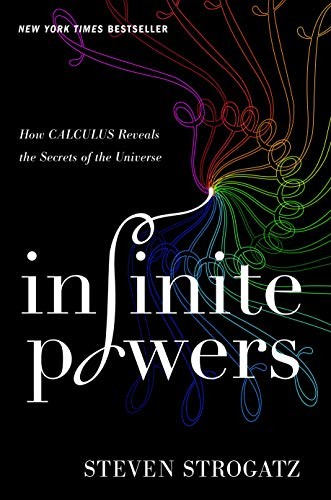
Infinite Powers
464 pages
A joyful, demystifying journey that transforms a dreaded school subject into a wondrous lens for viewing the universe.
What it feels like
Reading this book feels like taking a fascinating walk with a brilliant, endlessly patient professor who desperately wants you to see the magic he sees. It moves at a brisk, engaging clip, weaving together history, biography, and science to strip away the intimidating jargon of calculus. Instead of drowning you in equations, the narrative wraps you in a wondrous, optimistic atmosphere where the universe suddenly makes elegant sense. The prose is conversational and bright, relying on clever analogies that trigger a satisfying series of lightbulb moments. It is a perfect fit for curious minds, history buffs, and anyone who ever felt alienated by high school math but still yearns to understand the hidden mechanics of our modern world.
- Mood
- wondrous
- intellectual
- optimistic
- expansive
- Tone
- enthusiastic
- accessible
- conversational
- illuminating
- awe-struck
- Pace
- brisk
- Themes
- the hidden language of the universe · human ingenuity · simplicity within complexity · the interconnectedness of nature
- The writing
- Conversational and lucid, relying on vivid, everyday analogies rather than dense equations to explain profound truths.
- The arc
- Begins with gentle reassurance and builds into a soaring sense of wonder at the elegant mechanics of reality.
- Who it's for
- Curious non-experts and recovering math-phobes who want to marvel at the historical and scientific tapestry of our world.
About the book
From preeminent math personality and author of The Joy of x, a brilliant and endlessly appealing explanation of calculus—how it works and why it makes our lives immeasurably better.
Without calculus, we wouldn’t have cell phones, TV, GPS, or ultrasound. We wouldn’t have unraveled DNA or discovered Neptune or figured out how to put 5,000 songs in your pocket.
Though many of us were scared away from this essential, engrossing subject in high school and college, Steven Strogatz’s brilliantly creative, down-to-earth history shows that calculus is not about complexity; it’s about simplicity. It harnesses an unreal number—infinity—to tackle real-world problems, breaking them down into easier ones and then reassembling the answers into solutions that feel miraculous.
Infinite Powers recounts how calculus tantalized and thrilled its inventors, starting with its first glimmers in ancient Greece and bringing us right up to the discovery of gravitational waves (a phenomenon predicted by calculus). Strogatz reveals how this form of math rose to the challenges of each age: how to determine the area of a circle with only sand and a stick; how to explain why Mars goes “backwards” sometimes; how to make electricity with magnets; how to ensure your rocket doesn’t miss the moon; how to turn the tide in the fight against AIDS.
As Strogatz proves, calculus is truly the language of the universe. By unveiling the principles of that language, Infinite Powers makes us marvel at the world anew.
Description from Open Library.
Books like Infinite Powers
See why they match The Joy of XSteven StrogatzA friendly, eye-opening stroll through the hidden logic that shapes our everyday lives, led by the teacher you wish you had.
 ZeroCharles SeifeA dizzying, delightful journey through history and physics that makes the concept of nothingness feel like the most thrilling thing in the universe.
 In Pursuit of the UnknownIan StewartA fascinating, accessible tour through the invisible mathematical scaffolding that holds up our modern world.
 Everything and moreDavid Foster WallaceA dizzying, footnote-laden plunge into the mathematical abyss that stretches the limits of human comprehension.
 Isaac NewtonJames GleickAn elegant, atmospheric plunge into the obsessive and brilliant mind that dragged humanity out of the dark ages and into the light of modern physics.
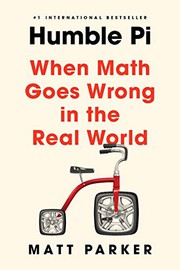 Humble PiMatt ParkerA hilarious, eye-opening tour through the catastrophic and comical consequences of getting the math wrong.