Books › Kanthapura
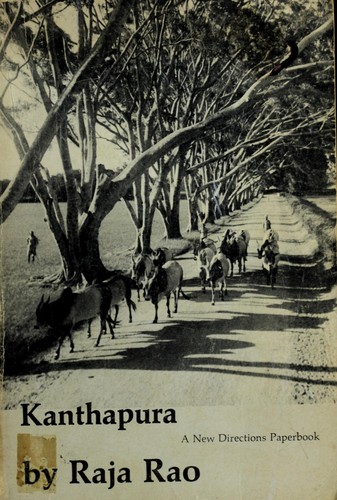
Kanthapura
First published 1938 · 269 pages
A breathless, mythic oral history of a traditional village swept up in the turbulent tide of revolution.
What it feels like
Reading this novel feels like sitting at the feet of a village elder, listening to a breathless, rhythmic history that blurs the line between political reality and ancient myth. The prose is distinctly oral, bending the English language to capture the cadence of Kannada speech, creating a steady, hypnotic flow that pulls you deep into the communal life of the village. As the atmosphere shifts from deeply rooted tranquility to turbulent political awakening, the emotional texture becomes impassioned and reverent. It is a story not of a single hero, but of a collective consciousness waking up to resistance. This book will deeply satisfy readers who love postcolonial literature, grassroots histories, and stories where a community itself is the beating heart of the narrative.
- Mood
- communal
- turbulent
- spiritual
- rooted
- Tone
- mythic
- earnest
- colloquial
- impassioned
- reverent
- Pace
- steady
- Themes
- collective awakening · tradition versus modernity · spiritualization of politics · social hierarchy · power of myth
- The writing
- Breathless, rhythmic, and highly colloquial, deliberately bending English to capture the cadence of Kannada oral storytelling.
- The arc
- Begins in the deeply rooted rhythms of ancient village life and swells into a turbulent, impassioned struggle for collective liberation.
- Who it's for
- Lovers of postcolonial literature and mythic storytelling who want to feel immersed in the collective voice of a community in flux.
Content notes
- caste-based discrimination
- police brutality
- colonial violence
- death of a parent
About the book
Raja Rao's first and best-known novel, Kanthapura (1938), is the story of a south Indian village named Kanthapura. The novel is narrated in the form of a purana by an old woman of the village, Achakka. Dominant castes like Brahmins are privileged to get the best region of the village, while lower casts such as Pariahs are marginalized. Despite this classist system, the village retains its long-cherished traditions of festivals in which all castes interact and the villagers are united. The village is believed to be protected by a local deity named Kenchamma.
The main character of the novel, Moorthy, is a young Brahmin who leaves for the city to study, where he becomes familiar with Gandhian philosophy. He begins living a Gandhian lifestyle, wearing home-spun khaddar and discarded foreign clothes and speaking out against the caste system. This causes the village priest to turn against Moorthy and excommunicate him. Heartbroken to hear this, Moorthy's mother Narasamma dies. After this, Moorthy starts living with an educated widow, Rangamma, who is active in India’s independence movement.
Moorthy is then invited by Brahmin clerks at the Skeffington coffee estate to create an awareness of Gandhian teachings among the pariah coolies. When Moorthy arrives, he is beaten by the policeman Bade Khan, but the coolies stand up for Moorthy and beat Bade Khan - an action for which they are then thrown out of the estate. Moorthy continues his fight against injustice and social inequality and becomes a staunch ally of Gandhi. Although he is depressed over the violence at the estate, he takes responsibility and goes on a three-day fast and emerges morally elated. A unit of the independence committee is then formed in Kanthapura, with the office bearers vowing to follow Gandhi’s teachings under Moorthy's leadership.
The British government accuses Moorthy of provoking the townspeople to inflict violence and arrests him. Though the committee is willing to pay his bail, Moorthy refuses their money. While Moorthy spends the next three months in prison, the women of Kanthapura take charge, forming a volunteer corps under Rangamma's leadership. Rangamma instills a sense of patriotism among the women by telling them stories of notable women from Indian history. They face police brutality, including assault and rape, when the village is attacked and burned. Upon Moorthy's release from prison, he is greeted by the loyal townspeople, who are now united regardless of caste. The novel ends with Moorthy and the town looking to the future and planning to continue their fight for independence.
Description from Open Library.
Books like Kanthapura
See why they match Nectar in a sieveKamala MarkandayaA quiet, devastating testament to human endurance and the unbreakable bonds of love amidst the relentless crush of poverty.
![Cover of Untouchable [by] Mulk Raj Anand](https://covers.openlibrary.org/b/id/97377-M.jpg) Untouchable [by] Mulk Raj AnandMulk AnandA searing, intimate portrait of a single day lived under the crushing weight of systemic prejudice.
Untouchable [by] Mulk Raj AnandMulk AnandA searing, intimate portrait of a single day lived under the crushing weight of systemic prejudice. The White TigerAravind AdigaA darkly comic and irreverent confession from an amoral antihero clawing his way to the top of a corrupt society.
 The bachelor of artsRasipuram Krishnaswamy NarayanAn intimate, character-driven portrait of post-collegiate life set against the vivid backdrop of a mid-century South Indian town.
 A Passage to IndiaE. M. ForsterA masterclass in atmospheric tension that exposes the fragile, tragic limits of human connection under the shadow of empire.
 India after GandhiRamachandra GuhaA sweeping, monumental journey through the chaotic, improbable, and triumphant survival of the world's largest democracy.