Books › King Leopold's ghost
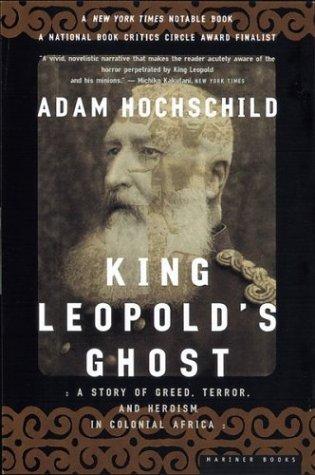
King Leopold's ghost
First published 1998 · 530 pages
A harrowing, character-driven descent into one of history's most brutal colonial atrocities, illuminated by the fierce courage of early human rights crusaders.
What it feels like
Reading this book feels like stepping into a beautifully constructed but deeply harrowing museum exhibit. The prose is steady and accessible, reading more like a gripping, character-driven novel than a dry historical text, yet the reality it uncovers is relentlessly grim. The atmosphere is heavy with dread and righteous indignation, pulling you through the dark heart of colonial greed and the staggering scale of human suffering it caused. But it is not merely a catalog of horrors; the narrative is buoyed by a profound sense of moral courage as it tracks the whistleblowers who risked everything to expose the truth. It will deeply satisfy readers who devour narrative history, offering a sobering, unforgettable journey that reshapes how you see the legacy of empire.
- Mood
- harrowing
- grim
- haunting
- righteous
- Tone
- indignant
- authoritative
- empathetic
- sobering
- Pace
- steady
- Themes
- colonial exploitation · the banality of evil · historical amnesia · moral courage · birth of human rights
- The writing
- Accessible and character-driven, balancing rigorous historical detail with the compelling pacing of a novel.
- The arc
- Moves from horrified disbelief at the scale of systemic cruelty to a sobering, righteous appreciation for the whistleblowers who fought back.
- Who it's for
- Readers who appreciate deeply researched, character-focused history that unearths forgotten atrocities and the moral crusaders who expose them.
Content notes
- genocide
- torture and mutilation
- colonial violence
- racism
- forced labor
About the book
In the 1880s, as the European powers were carving up Africa, King Leopold II of Belgium seized for himself the vast and mostly unexplored territory surrounding the Congo River. Carrying out a genocidal plundering of the Congo, he looted its rubber, brutalized its people, and ultimately slashed its population by ten million--all the while shrewdly cultivating his reputation as a great humanitarian. Heroic efforts to expose these crimes eventually led to the first great human rights movement of the twentieth century, in which everyone from Mark Twain to the Archbishop of Canterbury participated. King Leopold's Ghost is the haunting account of a megalomaniac of monstrous proportions, a man as cunning, charming, and cruel as any of the great Shakespearean villains. It is also the deeply moving portrait of those who fought Leopold: a brave handful of missionaries, travelers, and young idealists who went to Africa for work or adventure and unexpectedly found themselves witnesses to a holocaust. Adam Hochschild brings this largely untold story alive with the wit and skill of a Barbara Tuchman. Like her, he knows that history often provides a far richer cast of characters than any novelist could invent. Chief among them is Edmund Morel, a young British shipping agent who went on to lead the international crusade against Leopold. Another hero of this tale, the Irish patriot Roger Casement, ended his life on a London gallows. Two courageous black Americans, George Washington Williams and William Sheppard, risked much to bring evidence of the Congo atrocities to the outside world. Sailing into the middle of the story was a young Congo River steamboat officer named Joseph Conrad. And looming above them all, the duplicitous billionaire King Leopold II. With great power and compassion, King Leopold's Ghost will brand the tragedy of the Congo--too long forgotten--onto the conscience of the West.
Description from Open Library.
Books like King Leopold's ghost
See why they match CongoDavid van ReybrouckA sweeping, unflinching journey through centuries of exploitation, resilience, and turbulent history.
 We wish to inform you that tomorrow we will be killed with our familiesPhilip GourevitchA devastating, essential work of narrative journalism that forces the reader to confront the darkest depths of human cruelty and the agonizing complexities of survival.
 The scramble for Africa, 1876-1912Thomas PakenhamA sweeping, novelistic chronicle of imperial hubris that reads like a grand, tragic geopolitical thriller.
 The looting machineTom BurgisA sobering, urgent investigation into the systemic exploitation that keeps a resource-rich continent economically precarious.
 A Problem from HellSamantha PowerA searing, meticulously documented indictment of global inaction in the face of ultimate evil.
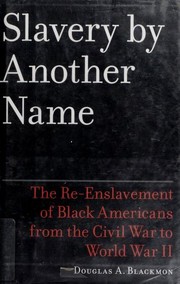 Slavery by another nameDouglas A. BlackmonA devastating, meticulously documented reckoning that shatters the myth of emancipation and exposes the brutal machinery of systemic exploitation.