Books › Noise

Noise
672 pages
A methodical, eye-opening exploration of the invisible inconsistencies that secretly govern our most important decisions.
What it feels like
Reading this book feels like putting on a pair of glasses that suddenly reveals the invisible static blurring the world's most important systems. The pace is steady and methodical, demanding your full attention as it dismantles the illusion of human objectivity. The tone is authoritative yet sobering, guiding you through a landscape of unsettling inconsistencies in medicine, law, and business. It is an intellectual and contemplative experience, initially inducing a sense of dread at how arbitrary our judgments can be, before pivoting into a pragmatic, empowering framework for improvement. The prose is clear, data-driven, and heavily analytical. It will deeply satisfy professionals, policymakers, and armchair behavioral economists who crave rigorous, research-backed insights into the hidden mechanics of human error.
- Mood
- intellectual
- illuminating
- contemplative
- unsettling
- Tone
- analytical
- authoritative
- instructive
- sobering
- objective
- Pace
- steady
- Themes
- fallibility of human judgment · systemic inconsistency · illusion of objectivity · decision hygiene · hidden variables
- The writing
- Clear, methodical, and heavily data-driven, translating complex statistical concepts into accessible, real-world examples.
- The arc
- Moves from a disconcerting realization of widespread human error to a pragmatic, empowered understanding of how to mitigate it.
- Who it's for
- Leaders, policymakers, and curious minds eager to understand the hidden mechanics of human error and optimize their decision-making.
Content notes
- discussions of judicial sentencing disparities
- medical misdiagnoses
About the book
From the best-selling author of Thinking, Fast and Slow, the co-author of Nudge, and the author of You Are About to Make a Terrible Mistake! comes Noise, a revolutionary exploration of why people make bad judgments, and how to control both noise and cognitive bias.
Imagine that two doctors in the same city give different diagnoses to identical patients - or that two judges in the same courthouse give markedly different sentences to people who have committed the same crime. Suppose that different interviewers at the same firm make different decisions about indistinguishable job applicants - or that when a company is handling customer complaints, the resolution depends on who happens to answer the phone. Now imagine that the same doctor, the same judge, the same interviewer, or the same customer service agent makes different decisions depending on whether it is morning or afternoon, or Monday rather than Wednesday. These are examples of noise: variability in judgments that should be identical.
In Noise, Daniel Kahneman, Olivier Sibony, and Cass R. Sunstein show the detrimental effects of noise in many fields, including medicine, law, economic forecasting, forensic science, bail, child protection, strategy, performance reviews, and personnel selection. Wherever there is judgment, there is noise. Yet, most of the time, individuals and organizations alike are unaware of it. They neglect noise. With a few simple remedies, people can reduce both noise and bias, and so make far better decisions.
Packed with original ideas, and offering the same kinds of research-based insights that made Thinking, Fast and Slow and Nudge groundbreaking New York Times best sellers, Noise explains how and why humans are so susceptible to noise in judgment - and what we can do about it.
Description from Open Library.
Books like Noise
See why they match Thinking, fast and slowDaniel KahnemanA humbling, mind-expanding tour through the hidden machinery of your own thoughts that will permanently alter how you view human rationality.
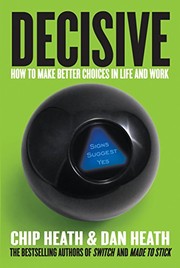 DecisiveChip Heath and Dan HeathA clarifying, anecdote-rich toolkit that transforms the anxiety of choosing into a structured, empowering process.
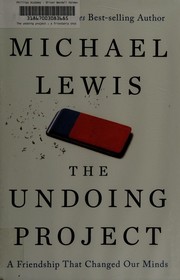 The undoing projectMichael LewisA brilliant, bittersweet exploration of how two contrasting minds came together to rewrite the rules of human logic, only to be torn apart by their own human flaws.
 Perfectly irrationalDan ArielyA playful, eye-opening tour through the hidden quirks and cognitive blind spots that secretly run our lives.
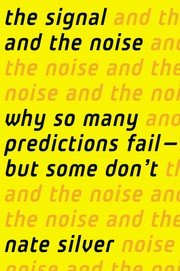 The Signal and the NoiseNate SilverA clear-eyed, intellectually humble journey through the chaotic world of data, teaching you how to spot the truth hidden in the static.
 Think AgainAdam GrantA friendly, intellectually stimulating invitation to dismantle your deepest assumptions and discover the freedom of changing your mind.