Books › Omnivore's Dilemma. A Natural History of Four Meals
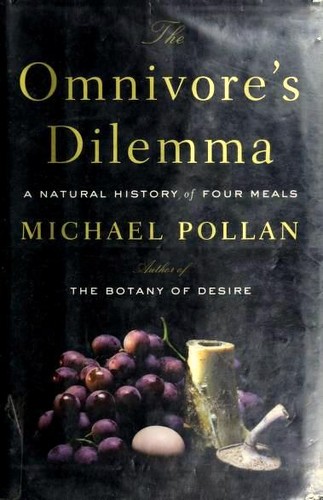
Omnivore's Dilemma. A Natural History of Four Meals
First published 2006 · 711 pages
An eye-opening, dirt-under-the-fingernails journey tracing the hidden paths our food takes before it reaches the plate.
What it feels like
Reading this book feels like taking a long, illuminating walk with a relentlessly curious friend who happens to know exactly how the world works. It moves at a steady, methodical pace, peeling back the glossy supermarket labels to reveal the complex, often unsettling realities of modern agriculture. The mood is grounded and earthy, shifting from the sterile dread of industrial feedlots to the sun-warmed satisfaction of a hand-foraged meal. The prose is elegant yet highly accessible, blending deep investigative journalism with personal, sometimes wry reflections. It is an essential read for curious eaters, environmentalists, and anyone seeking to bridge the profound disconnect between nature and the dinner table, leaving you forever changed in how you view a simple ear of corn.
- Mood
- grounded
- eye-opening
- contemplative
- earthy
- Tone
- inquisitive
- conversational
- earnest
- wry
- authoritative
- Pace
- steady
- Themes
- connection to nature · hidden costs of convenience · mindful consumption · the illusion of choice · human ecology
- The writing
- Elegant, lucid, and engagingly conversational, seamlessly blending personal anecdote with deep investigative research.
- The arc
- Moves from overwhelming confusion about modern food systems to a grounded, mindful appreciation of our place in the natural world.
- Who it's for
- Curious eaters, environmentalists, and anyone who wants to understand the invisible systems shaping their daily lives.
Content notes
- animal slaughter
- factory farming descriptions
- hunting
About the book
What should we have for dinner? The question has confronted us since man discovered fire, but according to Michael Pollan, the bestselling author of The Botany of Desire, how we answer it today, at the dawn of the twenty-first century, may well determine our very survival as a species. Should we eat a fast-food hamburger? Something organic? Or perhaps something we hunt, gather, or grow ourselves? The omnivore’s dilemma has returned with a vengeance, as the cornucopia of the modern American supermarket and fast-food outlet confronts us with a bewildering and treacherous food landscape. What’s at stake in our eating choices is not only our own and our children’s health, but the health of the environment that sustains life on earth.
In this groundbreaking book, one of America’s most fascinating, original, and elegant writers turns his own omnivorous mind to the seemingly straightforward question of what we should have for dinner. To find out, Pollan follows each of the food chains that sustain us—industrial food, organic or alternative food, and food we forage ourselves—from the source to a final meal, and in the process develops a definitive account of the American way of eating. His absorbing narrative takes us from Iowa cornfields to food-science laboratories, from feedlots and fast-food restaurants to organic farms and hunting grounds, always emphasizing our dynamic coevolutionary relationship with the handful of plant and animal species we depend on. Each time Pollan sits down to a meal, he deploys his unique blend of personal and investigative journalism to trace the origins of everything consumed, revealing what we unwittingly ingest and explaining how our taste for particular foods and flavors reflects our evolutionary inheritance.
The surprising answers Pollan offers to the simple question posed by this book have profound political, economic, psychological, and even moral implications for all of us. Beautifully written and thrillingly argued, The Omnivore’s Dilemma promises to change the way we think about the politics and pleasure of eating. For anyone who reads it, dinner will never again look, or taste, quite the same.
Description from Open Library.
Books like Omnivore's Dilemma. A Natural History of Four Meals
See why they match In Defense of FoodMichael PollanA clarifying, deeply sensible manifesto that cuts through dietary noise to restore the simple joy of eating real food.
 Eating animalsJonathan Safran FoerAn urgent, deeply personal reckoning with the stories we tell ourselves about the food on our plates.
 CookedMichael PollanA sensory, philosophical journey into the kitchen that transforms the everyday act of cooking into elemental magic.
 Fast Food NationEric SchlosserA gripping, stomach-churning journey behind the counter of America's most ubiquitous industry.
 Animal, Vegetable, MiracleBarbara Kingsolver, Camille Kingsolver and othersA warm, dirt-under-the-fingernails memoir that invites you to slow down and taste the seasons.
 Four fishPaul GreenbergA sobering, globe-trotting exploration of humanity's deep connection to the ocean and the urgent ecological costs of our appetite.