Books › On China
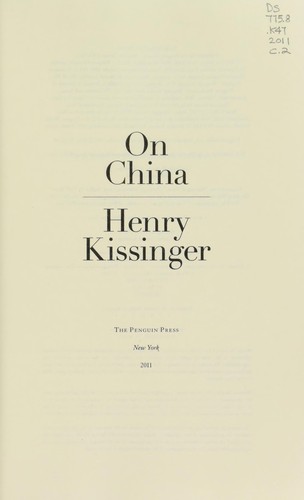
On China
586 pages
A sweeping, statesman's-eye view of a civilization's grand strategy and its high-stakes collision with the modern world.
What it feels like
Reading this book feels like sitting in a wood-paneled study with a seasoned statesman, tracing the arc of a civilization across a massive, unfolding map. The pace is steady and deliberate, demanding your full intellectual engagement as it weaves centuries of classical philosophy with the tense, closed-door negotiations of the Cold War. The mood is grand and deeply serious, steeped in the weight of history and the high stakes of global power. The prose is formal and erudite, marked by a diplomatic precision that dissects cultural misunderstandings and strategic maneuvers with cool detachment. It is a profoundly analytical experience, delighting history buffs and political junkies who crave a sweeping, top-down view of how empires think, negotiate, and endure.
- Mood
- intellectual
- grand
- serious
- contemplative
- Tone
- authoritative
- analytical
- diplomatic
- scholarly
- reflective
- Pace
- steady
- Themes
- grand strategy · the weight of history · cultural paradigms · balance of power · geopolitical maneuvering
- The writing
- Formal, erudite, and measured, blending sweeping historical narrative with the precise, calculated language of a seasoned diplomat.
- The arc
- Begins with a sense of ancient, sweeping grandeur and transitions into the tense, high-stakes intellectual chess matches of modern geopolitics.
- Who it's for
- Readers fascinated by international relations, grand strategy, and the historical underpinnings of modern geopolitical power dynamics.
Content notes
- war
- political violence
- historical atrocities
About the book
"In this sweeping and insightful history, Henry Kissinger turns for the first time at book-length to a country he has known intimately for decades, and whose modern relations with the West he helped shape. Drawing on historical records as well as his conversations with Chinese leaders over the past forty years, Kissinger examines how China has approached diplomacy, strategy, and negotiation throughout its history, and reflects on the consequences for the global balance of power in the 21st century. Since no other country can claim a more powerful link to its ancient past and classical principles, any attempt to understand China's future world role must begin with an appreciation of its long history. For centuries, China rarely encountered other societies of comparable size and sophistication; it was the "Middle Kingdom," treating the peoples on its periphery as vassal states. At the same time, Chinese statesmen-facing threats of invasion from without, and the contests of competing factions within-developed a canon of strategic thought that prized the virtues of subtlety, patience, and indirection over feats of martial prowess. In 'On China', Kissinger examines key episodes in Chinese foreign policy from the classical era to the present day, with a particular emphasis on the decades since the rise of Mao Zedong. He illuminates the inner workings of Chinese diplomacy during such pivotal events as the initial encounters between China and modern European powers, the formation and breakdown of the Sino-Soviet alliance, the Korean War, Richard Nixon's historic trip to Beijing, and three crises in the Taiwan Straits. Drawing on his extensive personal experience with four generation of Chinese leaders, he brings to life towering figures such as Mao, Zhou Enlai, and Deng Xiaoping, revealing how their different visions have shaped China's modern destiny. With his singular vantage on U.S.-China relations, Kissinger traces the evolution of this fraught but crucial relationship over the past 60 years, following its dramatic course from estrangement to strategic partnership to economic interdependence, and toward an uncertain future. With a final chapter on the emerging superpower's 21st-century world role,'On China' provides an intimate historical perspective on Chinese foreign affairs from one of the premier statesmen of the 20th century"--
Description from Open Library.
Books like On China
See why they match DiplomacyHenry KissingerA monumental and pragmatic exploration of how the balance of power and the art of negotiation shape the modern world.
 The hundred-year marathonMichael PillsburyA sobering, insider's look at global power dynamics that reads like a geopolitical thriller.
 On grand strategyJohn Lewis GaddisA sweeping, witty master class in the timeless art of leadership and statecraft, distilled from decades of historical reflection.
 The Grand ChessboardZbigniew BrzezinskiA masterclass in cold, calculated geopolitical strategy that views the globe as a literal game board.
 The post-American worldFareed ZakariaA clear-eyed, panoramic view of a rapidly changing globe that replaces anxiety with pragmatic optimism.
 World orderHenry KissingerA sweeping, eagle-eye view of how empires rise, balance, and collide across centuries of human history.