Books › Orientalism

Orientalism
First published 1978 · 735 pages
A foundational, paradigm-shifting critique that permanently alters how you consume Western depictions of the East.
What it feels like
Reading this foundational text feels like putting on a new pair of glasses that suddenly brings the hidden structures of the world into sharp, undeniable focus. It is a dense, steady, and deeply intellectual experience, demanding your full attention as it meticulously dismantles centuries of Western assumptions. The mood is weighty and illuminating, steeped in an impassioned scholarly rigor that challenges you to rethink everything you know about literature, history, and media. The prose is erudite and complex, weaving together literary criticism and political theory to expose how knowledge is weaponized by power. It is a profoundly rewarding journey for the critical thinker, leaving you with a permanently altered worldview and a heightened sensitivity to the subtle mechanics of cultural imperialism and exoticization.
- Mood
- intellectual
- illuminating
- weighty
- paradigm-shifting
- Tone
- scholarly
- critical
- impassioned
- authoritative
- analytical
- Pace
- steady
- Themes
- cultural imperialism · the power of representation · Western hegemony · othering and exoticization · knowledge as power
- The writing
- Dense, erudite, and meticulously argued, demanding close attention but rewarding the reader with sharp, structural clarity.
- The arc
- Moves from a state of accepted cultural assumptions to a profound, critical awakening that permanently alters one's worldview.
- Who it's for
- Readers who want to deconstruct the hidden biases in Western media, literature, and scholarship, and those fascinated by the intersection of power and knowledge.
Content notes
- discussions of racism
- imperialism and colonialism
- cultural erasure
- xenophobia
About the book
Orientalism is a 1978 book by Edward W. Said, in which the author discusses Orientalism, defined as the West's patronizing representations of "The East"—the societies and peoples who inhabit the places of Asia, North Africa, and the Middle East. According to Said, orientalism (the Western scholarship about the Eastern World) is inextricably tied to the imperialist societies who produced it, which makes much Orientalist work inherently political and servile to power.
According to Said, in the Middle East, the social, economic, and cultural practices of the ruling Arab elites indicate they are imperial satraps who have internalized the romanticized "Arab Culture" created by French, British and, later, American Orientalists; the examples include critical analyses of the colonial literature of Joseph Conrad, which conflates a people, a time, and a place into a narrative of incident and adventure in an exotic land.
The critical application of post-structuralism in the scholarship of Orientalism influenced the development of literary theory, cultural criticism, and the field of Middle Eastern studies, especially regarding how academics practice their intellectual inquiry when examining, describing, and explaining the Middle East. The scope of Said's scholarship established Orientalism as a foundation text in the field of post-colonial culture studies, which examines the denotations and connotations of Orientalism, and the history of a country's post-colonial period.
As a public intellectual, Edward Said debated Orientalism with historians and scholars of area studies, notably, the historian Bernard Lewis, who described the thesis of Orientalism as "anti-Western". For subsequent editions of Orientalism, Said wrote an "Afterword" (1995) and a "Preface" (2003)addressing criticisms of the content, substance, and style of the work as cultural criticism. (Wikipedia)
Description from Open Library.
Books like Orientalism
See why they match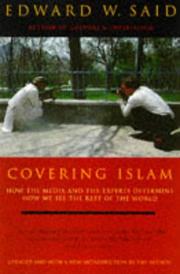 Covering IslamEdward W. SaidA sharp, analytical dismantling of how Western media and experts construct public perception of the Middle East.
 Literary theoryTerry EagletonAn engaging, unpretentious journey through the major movements of contemporary literary thought.
 Discours sur le colonialismeAimé CésaireA blistering, poetic indictment of Western civilization that reads like a revolutionary manifesto.
 Why the West Rules - For NowIan MorrisA sweeping, God's-eye view of human history that turns millennia of data into a gripping puzzle about geography, power, and our collective future.
 Manufacturing consentEdward S. Herman and Noam ChomskyA relentless, paradigm-shifting dismantling of the stories we are told by those in power.
 The Origins of TotalitarianismHannah ArendtA chilling, intellectually monumental dissection of how societies surrender to absolute darkness.