Books › Other people's money
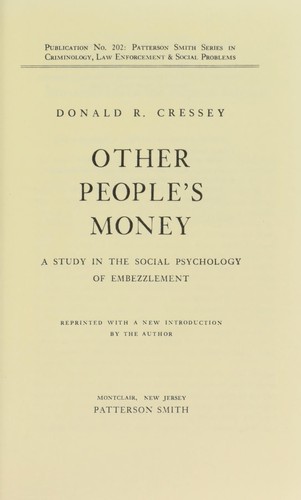
Other people's money
191 pages
A foundational, fascinating look into the psychological gymnastics ordinary people perform to justify stealing from their employers.
What it feels like
A methodical and deeply fascinating exploration of the human capacity for self-deception. Reading this foundational sociological text feels like sitting in on a series of quiet, confessional interviews with ordinary people who crossed a line they never thought they would. The pace is steady and academic, driven not by sensational true-crime thrills but by a clinical, empathetic curiosity about the mechanics of rationalization. The prose is clear and structured, laying out the psychological stepping stones that lead to embezzlement. It immerses the reader in a contemplative, slightly melancholic atmosphere, offering profound insights into white-collar crime. This is a must-read for anyone captivated by behavioral economics, forensic accounting, or the fragile boundaries of moral compromise.
- Mood
- clinical
- contemplative
- sobering
- Tone
- analytical
- objective
- scholarly
- empathetic
- Pace
- steady
- Themes
- psychology of fraud · rationalization of crime · white-collar desperation · erosion of trust · moral compromise
- The writing
- Clear, methodical, and academic, relying heavily on interview excerpts and sociological frameworks to build its case.
- The arc
- Moves from intellectual curiosity about the mechanics of theft to a sobering understanding of human fallibility and self-deception.
- Who it's for
- Readers fascinated by the psychological tipping points and internal justifications that turn ordinary professionals into criminals.
Content notes
- financial ruin
- incarceration
- discussions of crime
About the book
Bibliography: p. 159-166. Reprint of the 1953 ed. published by the Free Press, Glencoe, Ill.
Description from Open Library.
Books like Other people's money
See why they match The psychology of moneyFurnham, Adrian.A rigorous, research-driven exploration of the strange, irrational ways human minds process wealth, value, and status.
 Money mischiefMilton FriedmanA lucid, historical journey through the illusions and realities of money that will forever change how you view the dollar in your pocket.
 Extraordinary Popular Delusions and the Madness of CrowdsCharles MacKayA wry, sweeping tour through centuries of human gullibility and the spectacular crashes that follow.
 The psychology of moneyHenry Clay LindgrenA methodical, academic exploration of the hidden psychological forces that dictate our relationship with wealth.
 Money, interest, and pricesDon PatinkinA rigorous, mid-century academic exploration of the fundamental mechanics of money and value.
 CriminologyLarry SiegelA rigorous, structured exploration of the psychological and sociological roots of human deviance.