Books › Philosophiae naturalis principia mathematica

Philosophiae naturalis principia mathematica
974 pages
An austere, monumental descent into the mathematical bedrock of the universe, revealing the hidden clockwork of reality.
What it feels like
Reading this foundational text feels like scaling a sheer cliff face of pure logic. It is an uncompromisingly cerebral experience, demanding absolute focus as it builds, proposition by proposition, the mechanical laws that govern everything from falling apples to orbiting planets. The atmosphere is austere and expansive, stripping away the messy chaos of the sensory world to reveal a universe of elegant, mathematical clockwork. The prose is dense and axiomatic, offering no handholds of narrative comfort, only the relentless, steady march of geometric proofs. Yet, for the patient reader, the reward is a profound sense of awe—a breathtaking glimpse into the underlying order of nature and the staggering capacity of human reason to comprehend the cosmos.
- Mood
- cerebral
- austere
- awe-inspiring
- expansive
- Tone
- authoritative
- objective
- rigorous
- detached
- intellectual
- Pace
- steady
- Themes
- the order of the universe · power of human reason · mathematical elegance · laws of nature
- The writing
- Dense, axiomatic, and uncompromisingly technical, built upon a scaffolding of geometric proofs and formal propositions.
- The arc
- Moves from daunting intellectual intimidation to a profound, awe-struck reverence for the clockwork precision of the cosmos.
- Who it's for
- Readers fascinated by the history of science and mathematics who crave the intellectual challenge of engaging with a foundational text of human knowledge.
About the book
Parts 1 and 2 of v. 3 have continuous paging.
"Traite sur le flux et reflux de la mer. Par Mr. Daniel Bernoully": v. 3, pt. 1, p. 133-246.
"De causa physica fluxus et refluxus maris. A.D.D. Mac-Laurin": v. 3, pt. 1, p. 247-282.
"Inquisitio physica in causam fluxus ac refluxus maris. A.D.D. Euler": v. 3, pt. 1, p. 283-374.
Binder's error: an extra p. 509-510 bound between p. 536-537 in v. 3, pt. 2.
With the bookplate of Sir John Lubbock, Baron Avebury.
Copy 2. Vol. 1, half title wanting; p. xxxiii-xxxvi bound at end. Ex libris John Galbraith.
Copy 3. Ex libris James Loudon.
Description from Open Library.
Books like Philosophiae naturalis principia mathematica
See why they match PhysicsAristotleA rigorous, foundational descent into the mechanics of reality, change, and existence itself.
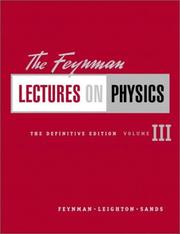 The Feynman Lectures on PhysicsRichard Phillips FeynmanAn exhilarating, conversational masterclass that peels back the mundane world to reveal the breathtaking machinery of the universe.
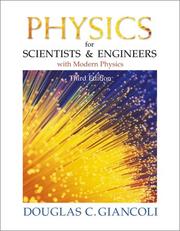 Physics for scientists and engineers with modern physicsDouglas C. GiancoliA methodical, calculus-based exploration of the fundamental forces and laws that govern the physical universe.
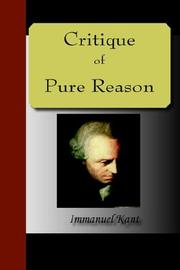 Kritik der reinen VernunftImmanuel KantA rigorous, foundational awakening from dogmatic slumber into the deep mechanics of human knowledge.
 The Nature of the Physical WorldArthur Stanley EddingtonA cerebral exploration of reality that bridges the gap between hard physics and the philosophy of knowledge.
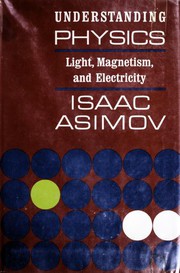 Light, Magnetism, and ElectricityIsaac AsimovA lucid, engaging journey through the history of physics that makes the universe's most complex phenomena feel wonderfully accessible.