Books › Poor Economics

Poor Economics
A radical rethinking of the way to fight global poverty
660 pages
A pragmatic, deeply empathetic exploration of how the world's poorest people actually live and make decisions, replacing dogma with data.
What it feels like
Reading this book feels like sitting down with two brilliant, deeply empathetic professors who are determined to dismantle everything you thought you knew about global poverty. The pace is steady and deliberate, guiding you through complex economic concepts with remarkable clarity and a grounded, inquisitive mood. Instead of overwhelming you with the sheer scale of global suffering, the narrative zooms in on the granular, daily decisions made by people living on less than a dollar a day. The prose is analytical yet profoundly human, blending rigorous data from randomized control trials with compelling personal stories. It is an eye-opening, surprisingly hopeful experience that will delight pragmatic altruists, policy nerds, and anyone eager to replace ideological assumptions with evidence-based understanding.
- Mood
- grounded
- eye-opening
- hopeful
- contemplative
- Tone
- analytical
- empathetic
- pragmatic
- inquisitive
- Pace
- steady
- Themes
- complexity of poverty · human behavior under constraint · evidence-based solutions · challenging assumptions · mechanics of survival
- The writing
- Clear, accessible, and data-driven, blending rigorous academic research with deeply human narratives.
- The arc
- Moves from confronting the overwhelming scale of global poverty to finding grounded, actionable hope through proven, incremental solutions.
- Who it's for
- Curious pragmatists, policy enthusiasts, and effective altruists who want to understand the real-world mechanics of poverty beyond ideological assumptions.
Content notes
- extreme poverty
- child mortality
- systemic inequality
- disease and illness
About the book
"Billions of government dollars, and thousands of charitable organizations and NGOs, are dedicated to helping the world's poor. But much of the work they do is based on assumptions that are untested generalizations at best, flat out harmful misperceptions at worst. Banerjee and Duflo have pioneered the use of randomized control trials in development economics. Work based on these principles, supervised by the Poverty Action Lab at MIT, is being carried out in dozens of countries. Their work transforms certain presumptions: that microfinance is a cure-all, that schooling equals learning, that poverty at the level of 99 cents a day is just a more extreme version of the experience any of us have when our income falls uncomfortably low. Throughout, the authors emphasize that life for the poor is simply not like life for everyone else: it is a much more perilous adventure, denied many of the cushions and advantages that are routinely provided to the more affluent"--
Description from Open Library.
Books like Poor Economics
See why they match Good Economics for Hard TimesEsther DufloA compassionate, myth-busting journey through modern policy that replaces partisan panic with evidence-based hope.
 The bottom billionPaul CollierA sobering yet pragmatic deep dive into the structural traps that keep the world's poorest nations from thriving.
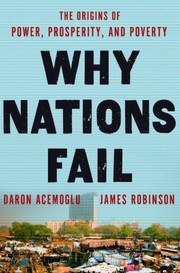 Why Nations FailDaron Acemoglu and James A. RobinsonA sweeping, intellectually rigorous journey through history that decodes the hidden machinery of global inequality.
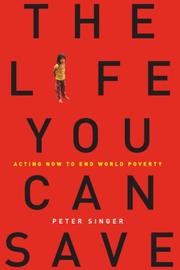 The life you can savePeter SingerA rigorously logical yet deeply humane challenge to rethink what it means to live an ethical life.
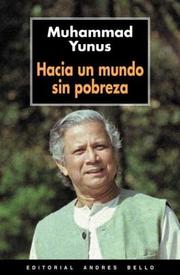 Creating a World Without PovertyMuhammad YunusAn inspiring, pragmatic blueprint for harnessing human altruism and free markets to solve the world's most pressing inequalities.
 ScarcitySendhil MullainathanA thought-provoking exploration of how the feeling of not having enough rewires our brains and shapes our world.