Books › The life you can save
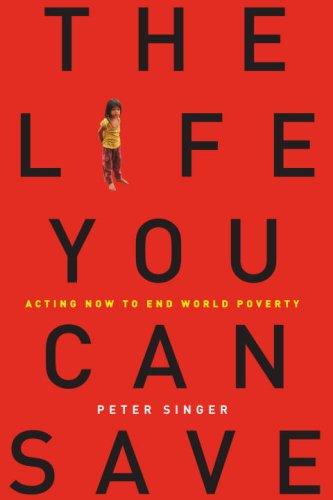
The life you can save
First published 2009 · 206 pages
A rigorously logical yet deeply humane challenge to rethink what it means to live an ethical life.
What it feels like
Reading this book feels like sitting down with a brilliant, uncompromising mentor who gently but firmly dismantles your excuses. The pace is steady and deliberate, building a philosophical argument step by step through vivid, unforgettable thought experiments. It creates a mood that is initially uncomfortable and convicting, forcing you to confront the stark realities of global inequality and the true cost of everyday luxuries. Yet, as the logical framework solidifies, the atmosphere shifts from heavy responsibility to profound empowerment. The prose is remarkably clear, stripping away academic jargon to speak directly to your conscience. It is a deeply earnest and urgent experience, perfect for readers who crave intellectual rigor combined with actionable, real-world impact, leaving you fundamentally changed in how you view your place in the world.
- Mood
- convicting
- contemplative
- hopeful
- serious
- Tone
- earnest
- persuasive
- logical
- challenging
- urgent
- Pace
- steady
- Themes
- moral obligation · effective altruism · global inequality · the ethics of wealth · personal responsibility
- The writing
- Clear, accessible, and rigorously logical, relying on vivid thought experiments rather than dense academic jargon.
- The arc
- Moves from uncomfortable conviction about global suffering to an empowering, actionable sense of moral purpose.
- Who it's for
- Readers who want to align their daily choices with their moral values and are open to having their assumptions challenged.
Content notes
- extreme poverty
- child mortality
- preventable diseases
About the book
This is the right time to ask yourself: "What should I be doing to help?"For the first time in history, it is now within our reach to eradicate world poverty and the suffering it brings. Yet around the world, a billion people struggle to live each day on less than many of us pay for bottled water. And though the number of deaths attributable to poverty worldwide has fallen dramatically in the past half-century, nearly ten million children still die unnecessarily each year. The people of the developed world face a profound choice: If we are not to turn our backs on a fifth of the world's population, we must become part of the solution. In The Life You Can Save, philosopher Peter Singer, named one of "The 100 Most Influential People in the World" by Time magazine, uses ethical arguments, provocative thought experiments, illuminating examples, and case studies of charitable giving to show that our current response to world poverty is not only insufficient but ethically indefensible.Singer contends that we need to change our views of what is involved in living an ethical life. To help us play our part in bringing about that change, he offers a seven-point plan that mixes personal philanthropy (figuring how much to give and how best to give it), local activism (spreading the word in your community), and political awareness (contacting your representatives to ensure that your nation's foreign aid is really directed to the world's poorest people). In The Life You Can Save, Singer makes the irrefutable argument that giving will make a huge difference in the lives of others, without diminishing the quality of our own. This book is an urgent call to action and a hopeful primer on the power of compassion, when mixed with rigorous investigation and careful reasoning, to lift others out of despair.From the Hardcover edition.
Description from Open Library.
Books like The life you can save
See why they match Strangers drowningLarissa MacFarquharA deeply unsettling and beautifully written exploration of what happens when people take morality to its absolute, uncompromising limits.
 The bottom billionPaul CollierA sobering yet pragmatic deep dive into the structural traps that keep the world's poorest nations from thriving.
 Doing Good BetterWilliam MacAskillA clear-eyed, data-driven guide that replaces the guilt of global suffering with the empowering math of doing actual good.
 Poor EconomicsEsther DufloA pragmatic, deeply empathetic exploration of how the world's poorest people actually live and make decisions, replacing dogma with data.
 Good Economics for Hard TimesEsther DufloA compassionate, myth-busting journey through modern policy that replaces partisan panic with evidence-based hope.
 What Money Can't BuyMichael J. SandelAn engaging, Socratic exploration that challenges the hidden moral costs of putting a price tag on every aspect of human life.