Books › Nudge

Nudge
Improving Decisions About Health, Wealth, and Happiness
384 pages
A fascinating, practical lens on human irrationality that makes you rethink every menu, form, and default setting you encounter.
What it feels like
Reading this book feels like putting on a new pair of glasses that suddenly reveals the hidden architecture of everyday life. The pacing is steady and methodical, guiding you through the quirks of human psychology with a wry, conversational tone that never feels overly academic. It cultivates a mood of continuous, enlightening discovery, shifting your perspective from a humbling realization of our collective irrationality to an optimistic sense of how we can design better environments. The prose is crisp and accessible, translating complex behavioral economics into relatable scenarios involving cafeterias, retirement plans, and organ donation. It is a deeply satisfying read for anyone who loves dissecting human behavior and wants to understand the invisible forces shaping our daily choices.
- Mood
- intellectually stimulating
- curious
- enlightening
- Tone
- pragmatic
- optimistic
- wry
- persuasive
- accessible
- Pace
- steady
- Themes
- human fallibility · the architecture of choice · cognitive biases · subtle influence · systemic improvement
- The writing
- Clear, conversational, and peppered with dry humor, translating dense behavioral science into relatable everyday examples.
- The arc
- Begins with a humbling exposure of human irrationality and builds toward an empowering, optimistic vision of designing better systems.
- Who it's for
- Curious thinkers, policymakers, and armchair psychologists fascinated by why we make bad choices and how to gently guide better ones.
About the book
Thaler and Sunstein develop libertarian paternalism as a middle path between command-and-control and strict-neutrality choice architectures. Libertarian paternalism protects humans against their damaging psychological traits (inertia, bounded rationality, undue influence) by exploiting those habits to nudge people into making better choices.
Description from Open Library.
Books like Nudge
See why they match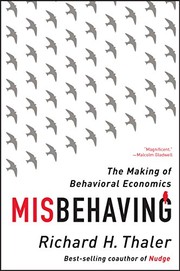 MisbehavingRichard H. ThalerA witty, eye-opening tour through the delightfully irrational quirks of human decision-making.
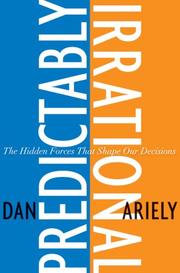 Predictably IrrationalDan ArielyA playful, eye-opening tour through the hidden forces that secretly pull the strings of our daily decisions.
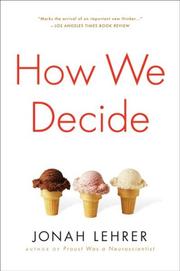 How we decideJonah LehrerA brisk, anecdote-rich tour through the hidden neurological gears that drive our everyday choices.
 Thinking, fast and slowDaniel KahnemanA humbling, mind-expanding tour through the hidden machinery of your own thoughts that will permanently alter how you view human rationality.
 Discover Your Inner EconomistTyler CowenA pragmatic and intellectually stimulating guide to hacking the hidden incentives that drive our daily lives.
 ScarcitySendhil MullainathanA thought-provoking exploration of how the feeling of not having enough rewires our brains and shapes our world.