Books › Prisoners of geography

Prisoners of geography
352 pages
A sweeping, pragmatic look at the world map that permanently alters how you watch the evening news.
What it feels like
Reading this book feels like putting on a pair of glasses that suddenly brings the chaotic world stage into sharp, sobering focus. It moves at a brisk, engaging clip, stripping away the ideological noise of global politics to reveal the silent, unyielding power of mountains, rivers, and oceans. The prose is crisp and journalistic, never bogging you down in academic jargon, but instead offering a pragmatic, bird's-eye view of human history. There is a distinct sense of illumination that builds with each chapter, accompanied by a slightly cynical realization about the limits of human agency. It is a deeply satisfying, expansive read for anyone who wants to look at a map and finally understand the invisible forces driving the headlines.
- Mood
- illuminating
- sobering
- expansive
- analytical
- Tone
- authoritative
- pragmatic
- accessible
- objective
- realist
- Pace
- brisk
- Themes
- geopolitical determinism · the constraints of nature · illusion of human control · power and resources · historical inevitability
- The writing
- Crisp, journalistic, and highly accessible, translating complex global dynamics into engaging, digestible narratives.
- The arc
- Transitions from a feeling of overwhelming global chaos to a sobering, clear-eyed clarity about why nations act the way they do.
- Who it's for
- Curious news-junkies and armchair historians who want a pragmatic, big-picture framework for understanding global conflicts.
Content notes
- war and conflict
- imperialism
- political violence
About the book
All leaders are constrained by geography. Their choices are limited by mountains, rivers, seas and concrete. Yes, to understand world events you need to understand people, ideas and movements - but if you don't know geography, you'll never have the full picture. To understand Putin's actions, for example, it is essential to consider that, to be a world power, Russia must have a navy. And if its ports freeze for six months each year then it must have access to a warm water port - hence, the annexation of Crimea was the only option for Putin. To understand the Middle East, it is crucial to know that geography is the reason why countries have logically been shaped as they are - and this is why invented countries (e.g. Syria, Iraq, Libya) will not survive as nation states. Spread over ten chapters (covering Russia; China; the USA; Latin America; the Middle East; Africa; India and Pakistan; Europe; Japan and Korea; and Greenland and the Arctic), using maps, essays and occasionally the personal experiences of the widely traveled author, Prisoners of Geography looks at the past, present and future to offer an essential guide to one of the major determining factors in world history.
Description from Open Library.
Books like Prisoners of geography
See why they match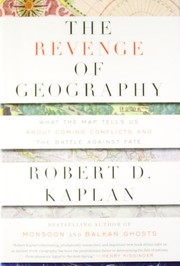 The Revenge of GeographyRobert D. KaplanA sweeping, pragmatic exploration of how mountains, rivers, and oceans dictate the fate of empires and the future of global conflict.
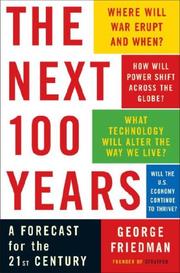 The Next 100 YearsGeorge FriedmanA sweeping, provocative thought experiment that treats the future of global power as a grand, predictable chessboard.
 The Grand ChessboardZbigniew BrzezinskiA masterclass in cold, calculated geopolitical strategy that views the globe as a literal game board.
 The Road to UnfreedomTimothy SnyderA chilling, intellectually rigorous autopsy of modern democracy's vulnerabilities and the creeping shadow of authoritarianism.
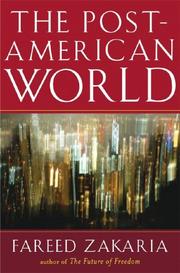 The post-American worldFareed ZakariaA clear-eyed, panoramic view of a rapidly changing globe that replaces anxiety with pragmatic optimism.
 On ChinaHenry KissingerA sweeping, statesman's-eye view of a civilization's grand strategy and its high-stakes collision with the modern world.