Books › Race After Technology
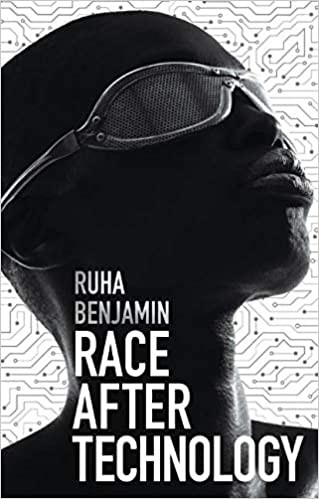
Race After Technology
285 pages
A sharp, eye-opening dismantling of the myth that algorithms and emerging technologies are inherently neutral.
What it feels like
Reading this book feels like putting on a pair of glasses that suddenly brings the hidden architecture of the modern world into sharp, unsettling focus. It is a steady, intellectually charged experience that strips away the glossy veneer of Silicon Valley benevolence to reveal the deep-seated biases encoded in our everyday digital tools. The prose is incisive and accessible, translating dense sociological concepts into urgent realities without ever feeling bogged down in academic jargon. You will find yourself pausing to rethink every app, algorithm, and automated system you interact with. It is a sobering but ultimately empowering read, perfect for socially conscious readers, tech workers, and anyone ready to trade blind technological optimism for a sharp, sociologically informed skepticism.
- Mood
- sobering
- intellectually charged
- revelatory
- unsettling
- Tone
- incisive
- urgent
- analytical
- authoritative
- critical
- Pace
- steady
- Themes
- the myth of neutrality · encoded bias · systemic inequity · technological determinism · the architecture of injustice
- The writing
- Sharp, accessible, and sociologically grounded, the writing effortlessly translates complex academic concepts into urgent, everyday realities.
- The arc
- The reader moves from a state of passive technological acceptance into a space of deep, unsettling revelation, ultimately arriving at an empowered, critical skepticism.
- Who it's for
- Socially conscious readers, tech workers, and anyone eager to dismantle the myth of Silicon Valley's benevolent neutrality.
Content notes
- systemic racism
- discrimination
- racial profiling
About the book
"From everyday apps to complex algorithms, Ruha Benjamin cuts through tech-industry hype to understand how emerging technologies can reinforce white supremacy and deepen social inequity. Far from a sinister story of racist programmers scheming on the dark web, Benjamin argues that automation has the potential to hide, speed, and even deepen discrimination, while appearing neutral and even benevolent when compared to racism of a previous era. Presenting the concept of the New Jim Code, she shows how a range of discriminatory designs encode inequity: by explicitly amplifying racial hierarchies, by ignoring but thereby replicating social divisions, or by aiming to fix racial bias but ultimately doing quite the opposite. Moreover, she makes a compelling case for race itself as a kind of tool a technology designed to stratify and sanctify social injustice that is part of the architecture of everyday life. This illuminating guide into the world of biased bots, altruistic algorithms, and their many entanglements provides conceptual tools to decode tech promises with sociologically informed skepticism. In doing so, it challenges us to question not only the technologies we are sold, but also the ones we manufacture ourselves"--
"Cutting through tech-industry hype, this book explores how emerging technologies reinforce white supremacy. Conceptualizing the "New Jim Code," Benjamin shows how discriminatory designs can encode inequity and also makes a case for race itself as a kind of tool designed to stratify and sanctify social injustice"--
Description from Open Library.
Books like Race After Technology
See why they match Automating InequalityVirginia EubanksA sobering, urgent investigation into how modern algorithms encode and amplify bureaucratic cruelty against the most vulnerable.
 Algorithms of OppressionSafiya Umoja NobleA paradigm-shifting examination of the digital architecture that quietly shapes our reality and reinforces systemic prejudice.
 Stamped from the BeginningIbram X. KendiA monumental, paradigm-shifting journey through the intellectual history of American racism that demands a fundamental rewiring of how you view the present.
 RacecraftKaren E. Fields and Barbara J. FieldsA paradigm-shifting intellectual journey that dismantles the very vocabulary we use to talk about inequality.
 Racism without RacistsEduardo Bonilla-SilvaA rigorous, eye-opening dissection of the subtle language and hidden frameworks that uphold modern inequality.
 The Age of Surveillance CapitalismShoshana ZuboffA monumental, dread-inducing masterclass that provides the exact vocabulary needed to understand how the digital world is strip-mining human autonomy.