Books › Statistical methods for research workers

Statistical methods for research workers
362 pages
A rigorous, foundational journey into the mathematical architecture of modern scientific inquiry.
What it feels like
Reading this foundational text feels like stepping into the very architecture of modern scientific thought. The pace is necessarily steady, demanding a slow, deliberate engagement with its dense and mathematically precise prose. There is a profound sense of intellectual rigor that permeates the atmosphere, creating a mood that is deeply analytical and focused. It is not a book that sweeps you away on a narrative tide, but rather one that anchors you in the logic of discovery and empirical truth. The experience is one of building a robust mental framework, moving from the chaos of raw observation to the satisfying clarity of structured analysis. It will deeply delight statisticians, historians of science, and researchers who crave a direct connection to the origins of experimental design.
- Mood
- intellectual
- rigorous
- analytical
- focused
- Tone
- authoritative
- academic
- precise
- didactic
- objective
- Pace
- steady
- Themes
- scientific rigor · empirical truth · mathematical foundations · experimental design · logic of discovery
- The writing
- Dense, formal, and historically significant, demanding careful attention to its precise mathematical formulations.
- The arc
- Transitions from the overwhelming complexity of raw data to the satisfying clarity of structured mathematical analysis.
- Who it's for
- Researchers, statisticians, and historians of science who want to engage directly with the foundational texts of modern empirical methodology.
Content notes
- historical scientific context
About the book
"Sources used for data and methods": p. 325-327. Bibliography (works by the author): p. 329-336.
Description from Open Library.
Books like Statistical methods for research workers
See why they match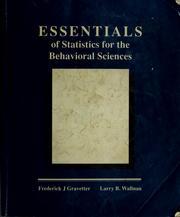 Essentials of statistics for the behavioral sciencesFrederick J. GravetterA patient, structured guide that transforms intimidating mathematical concepts into accessible tools for understanding human behavior.
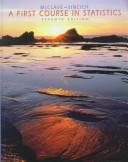 A first course in statisticsJames T. McClave and Terry SincichA structured, methodical journey into the mechanics of data and probability.
 Sampling techniquesWilliam Gemmell CochranA rigorous, foundational immersion into the mathematics of sampling, designed to transform theoretical concepts into practical research tools.
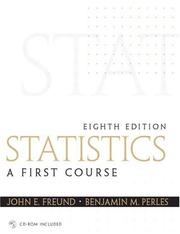 StatisticsJohn E. FreundA rigorous, no-nonsense journey into the foundational logic of probability and data.
 Ecological methodologyCharles J. KrebsA rigorous, foundational guide that transforms the messy reality of the natural world into structured, quantifiable data.
 Statistics for management and economicsWilliam MendenhallA rigorous, methodical immersion into the foundational tools of quantitative analysis and data-driven decision making.