Books › Structure and Interpretation of Computer Programs (SICP)
Structure and Interpretation of Computer Programs (SICP)
First published 1985 · 883 pages
A rigorous, mind-expanding grimoire that treats programming not as a mechanical task, but as a profound medium of pure thought.
What it feels like
Reading this legendary text feels like being handed a wizard's grimoire, inviting you to peer beneath the surface of everyday programming and into the very soul of computation. The pace is necessarily steady, demanding that you pause, wrestle with the concepts, and let the profound elegance of Scheme wash over you. It is an intensely intellectual and mind-expanding experience, wrapped in prose that is both mathematically rigorous and surprisingly playful. As you journey through its pages, the initial intimidation gives way to a series of breathtaking epiphanies, fundamentally rewiring how you perceive abstraction, recursion, and system design. This is a rite of passage for the curious hacker, offering not just technical instruction, but a lasting philosophical awakening.
- Mood
- intellectual
- mind-expanding
- arcane
- challenging
- Tone
- authoritative
- philosophical
- playful
- rigorous
- Pace
- steady
- Themes
- the magic of abstraction · managing complexity · metalinguistic abstraction · the beauty of recursion · systems thinking
- The writing
- Precise, mathematically elegant, and surprisingly whimsical, treating code as a medium of pure thought.
- The arc
- Moves from daunting technical complexity to a profound, almost spiritual sense of structural enlightenment.
- Who it's for
- Curious programmers and hackers who want to look past syntax and understand the deep, underlying philosophy of computation.
About the book
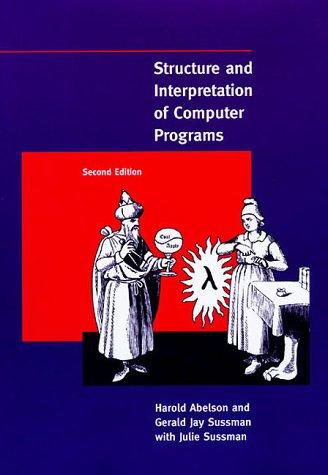
> Wizard Book n. Hal Abelson's, Jerry Sussman's and Julie Sussman's Structure and Interpretation of Computer Programs (MIT Press, 1984; ISBN 0-262-01077-1), an excellent computer science text used in introductory courses at MIT. So called because of the wizard on the jacket. One of the bibles of the LISP/Scheme world. Also, less commonly, known as the Purple Book.
from The New Hacker's Dictionary, 2nd edition (MIT Press, 1993)
Description from Open Library.
Books like Structure and Interpretation of Computer Programs (SICP)
See why they match The Little SchemerDaniel P. Friedman and Matthias FelleisenA playful, Socratic dialogue that uses food metaphors to rewire your brain into thinking in elegant, recursive loops.
 On LISPPaul GrahamAn analytical deep dive into building problem-specific languages through bottom-up programming.
 Eloquent JavascriptMarijn HaverbekeA beautifully crafted, philosophical journey into the heart of web programming that treats code as a medium of expression.
 Design concepts in programming languagesDavid Gifford and Mark A. SheldonA rigorous, systematic exploration of how simple frameworks can untangle the immense complexity of programming language design.
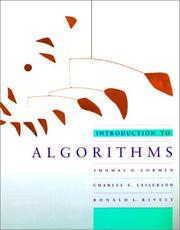 Introduction to AlgorithmsThomas H. Cormen, Charles E. Leiserson and othersA monumental, demanding masterclass in computational logic that rewards patient study with profound structural clarity.
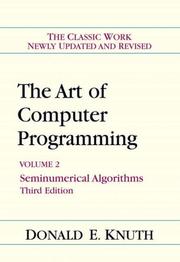 The art of computer programmingDonald KnuthA monumental, intellectually demanding pilgrimage into the mathematical soul of computation.