Books › Design concepts in programming languages
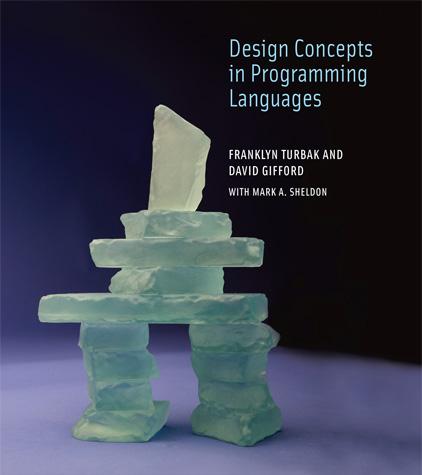
Design concepts in programming languages
1346 pages
A rigorous, systematic exploration of how simple frameworks can untangle the immense complexity of programming language design.
What it feels like
Reading this book feels like stepping into a meticulously organized laboratory of logic. The pace is steady and deliberate, guiding the reader through a comprehensive and systematic exploration of programming language design. The mood is highly intellectual and focused, anchored by the text's core philosophy: that incredibly complex language behaviors demand incredibly simple descriptions. The prose is clear, concise, and pedagogical, utilizing a family of syntactically simple languages to build understanding from the ground up. It is an experience of structured mastery, moving from foundational concepts to advanced implementation. This text will deeply satisfy advanced computer science students, researchers, and practitioners who crave a rigorous, analytical framework to decode the architecture of programming languages.
- Mood
- intellectual
- focused
- structured
- Tone
- academic
- instructive
- systematic
- analytical
- Pace
- steady
- Themes
- systematic exploration · complexity through simplicity · language design · pedagogical frameworks
- The writing
- Clear, concise, and highly structured, designed to distill complex behaviors into simple descriptions.
- The arc
- A journey from foundational simplicity to the mastery of incredibly complex systems.
- Who it's for
- Advanced computer science students, researchers, and practitioners looking for a rigorous, systematic approach to programming language design.
About the book
"This comprehensive text uses a simple and concise framework to teach key ideas in programming language design and implementation. The book's unique approach is based on a family of syntactically simple pedagogical languages that allow students to explore programming language concepts systematically. It takes as its premise and starting point the idea that when language behaviors become incredibly complex, the description of the behaviors must be incredibly simple." "The book is suitable as a text for an introductory graduate or advanced undergraduate programming languages course; it can also serve as a reference for researchers and practitioners."--Jacket.
Description from Open Library.
Books like Design concepts in programming languages
See why they match Types and Programming LanguagesBenjamin C. PierceA rigorous, hands-on journey into the logical architecture that underpins modern programming languages.
 Compilers, principles, techniques, and toolsAlfred V. Aho, Ravi Sethi and othersA rigorous, foundational descent into the deep magic of how human-readable code is transformed into machine execution.
 Data structures using C and C++Yedidyah LangsamA rigorous, foundational journey into the architecture of code, transforming abstract logic into concrete, working programs.
 Think PythonAllen B. DowneyA patient, hands-on guide that transforms the intimidating world of coding into a series of clear, solvable puzzles.
 Introduction to automata theory, languages, and computationJohn E. Hopcroft, Jeffrey D. Ullman and othersA rigorous, mind-expanding journey into the mathematical soul of computer science, mapping the absolute boundaries of what can and cannot be computed.
 C# in DepthJon SkeetA passionate, deep dive into the soul of a programming language that transforms everyday coders into true craftsmen.