Books › Sur les Cimes du Desespoir

Sur les Cimes du Desespoir
First published 1991 · 228 pages
A feverish, aphoristic meditation on the agony of consciousness that transforms suicidal despair into a darkly comic, lyrical will to live.
What it feels like
Reading this book feels like sitting with a brilliant, insomniac mind at the very edge of the abyss. It is a steady, aphoristic descent into the agony of consciousness, where dizzying lucidity turns existential dread into a canvas for lyrical exploration. The mood is undeniably feverish and despairing, yet shot through with an unexpected, absurd humor that acts as a lifeline. The prose burns with a self-consuming intensity, capturing the struggle of the Romantic soul against the universe. It is a deeply philosophical experience that transforms physical suffering and the contemplation of death into a saving burst of metaphysical revelation. This text will profoundly resonate with readers who find comfort, catharsis, and dark comedy in unflinching examinations of life's ultimate absurdities.
- Mood
- feverish
- despairing
- lucid
- apocalyptic
- agonizing
- Tone
- cynical
- skeptical
- lyrical
- intense
- darkly comic
- Pace
- steady
- Themes
- absurdity of existence · agony of consciousness · madness and death · physical suffering · metaphysical revelation
- The writing
- A masterclass in lyrical, aphoristic prose that burns with a self-consuming, dizzying lucidity.
- The arc
- Moves from the dizzying depths of suicidal despair and insomnia-induced agony to a saving burst of lyrical energy and absurd humor.
- Who it's for
- Readers who seek profound philosophical meditations on despair, skepticism, and the absurd humor found at the edge of existential crisis.
Content notes
- suicidal ideation
- madness
- death
- despair
- physical suffering
About the book
"This book saved my life." So recalls the Romanian philosopher E.M. Cioran about a book that meditates on madness and death, the absurdity of existence, and the agony of consciousness. Cioran finds in our darkest fears not only reasons to continue living but also the comic, absurd humor in doing so. This early work by Cioran, whom Susan Sontag calls "the most distinguished figure in the tradition of Kierkegaard, Nietzsche, and Wittgenstein," and Marc Fumaroli recently described as "a legend... a master of French prose," portrays the philosophical mind in the crisis of its self-consuming fever. Born out of a terrible insomnia which Cioran characterizes as "a dizzying lucidity which would turn even paradise into hell," On the Heights of Despair was written in Romania in 1934 at the age of twenty-two.^
It presents us with the youthful Cioran, who described himself as "a Nietzsche still complete with his Zarathustra, his poses, his mystical clown's tricks, a whole circus of the heights." It also presents Cioran as a connoisseur of apocalypse, a theoretician of despair. For Cioran, writing and philosophy are closely related to physical suffering: both share the "lyrical virtues" that alone lead to metaphysical revelation. The result is a book that becomes a substitute for as well as an antidote to suicide. By enacting the struggle of the Romantic soul against God, the universe, and itself, Cioran releases a saving burst of lyrical energy that carries him safely out of his desperation. On the Heights of Despair shows the philosopher's first grappling with themes he would return to in his mature works: despair and decay, absurdity and alienation, futility and the irrationality of existence.^
Yet the bracing verve of Cioran's writing and his earthy good humor point toward the elegant stylist of later works. An exorcism of despair, On the Heights of Despair offers insight into the ironic anguish of this philosophical mind. It also gives readers a fascinating look at Cioran's early development, opening new perspectives on his evolution as a writer and thinker.
Description from Open Library.
Books like Sur les Cimes du Desespoir
See why they match The Myth of Sisyphus and Other EssaysAlbert CamusA lyrical and defiant meditation on finding meaning and joy in a universe that refuses to offer any.
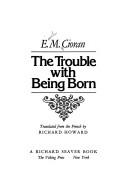 De l'inconvénient d'être néE. M. CioranA beautifully bleak collection of aphorisms that argues existence itself is the ultimate mistake, offering a strange comfort in its absolute despair.
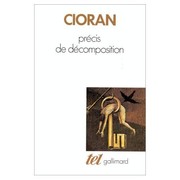 Précis de décompositionEmile M. CioranA beautifully written, uncompromising dismantling of human hope and the illusions that keep us going.
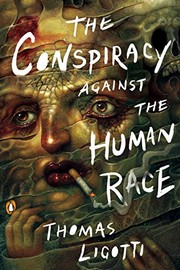 The conspiracy against the human raceThomas LigottiA meticulously argued descent into the terrifying realization that human consciousness is a tragic evolutionary mistake.
 Dostoevsky, Kierkegaard, Nietzsche, and KafkaHubben, WilliamA lucid, provocative journey into the minds of four outsiders who foresaw the chaos of the modern world.
 Sygdommen til dødenSøren KierkegaardA relentless, intellectually demanding plunge into the depths of human despair and the agonizing burden of becoming a self.