Books › The Art of Statistics

The Art of Statistics
488 pages
A clarifying lens for a data-drenched world, turning numerical noise into empowering understanding.
What it feels like
Reading this book feels like sitting down with a brilliant, patient professor who desperately wants you to understand the world a little better. The pace is steady and deliberate, allowing complex ideas to settle without ever feeling bogged down in academic jargon. It cultivates a mood of grounded curiosity, replacing the anxiety of our data-drenched era with a sense of intellectual empowerment. The prose is remarkably clear and conversational, using fascinating real-world examples ranging from serial killers to the Titanic to illuminate abstract concepts. It is an incredibly satisfying read for anyone who wants to look at news headlines, medical studies, and political claims with a sharper, more confident, and appropriately skeptical eye.
- Mood
- illuminating
- intellectual
- grounded
- curious
- Tone
- accessible
- pragmatic
- authoritative
- witty
- engaging
- Pace
- steady
- Themes
- data literacy · critical thinking · making sense of chaos · the power of evidence · informed skepticism
- The writing
- Clear, conversational, and refreshingly jargon-free, anchoring abstract mathematical concepts in vivid real-world scenarios.
- The arc
- Moves from a sense of being overwhelmed by modern data to a feeling of empowered, clear-eyed comprehension.
- Who it's for
- Curious non-experts and news junkies who want to confidently interpret the numbers thrown at them every day.
Content notes
- discussions of medical trauma
- mentions of serial murder
- historical tragedies
About the book
The essential guide to statistical science in the age of big data, from the President of the Royal Statistical Society.
How can statistics help us understand the world? Can we come to reliable conclusions when data is imperfect? How is statistics changing in the age of data science?
Statistics has played a leading role in our scientific understanding of the world for centuries, yet we are all familiar with the way statistical claims can be sensationalised, particularly in the media. In the age of big data, as data science becomes established as a discipline, a basic grasp of statistical literacy is more important than ever.
In The Art of Statistics, David Spiegelhalter guides the reader through the essential principles we need in order to derive knowledge from data. Drawing on real world problems to introduce conceptual issues, he shows us how statistics can help us determine the luckiest passenger on the Titanic, whether serial killer Harold Shipman could have been caught earlier, and if screening for ovarian cancer is beneficial.
How many trees are there on the planet? Do busier hospitals have higher survival rates? Why do old men have big ears? Spiegelhalter reveals the answers to these and many other questions - questions that can only be addressed using statistical science.
Description from Open Library.
Books like The Art of Statistics
See why they match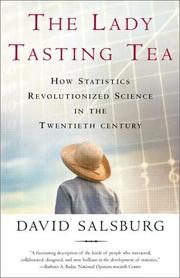 The Lady Tasting TeaDavid SalsburgAn illuminating journey through the intellectual breakthroughs and statistical theories that quietly reshaped modern scientific inquiry.
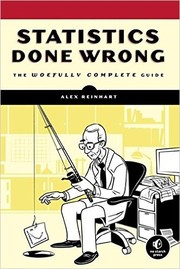 Statistics Done WrongAlex ReinhartA pithy, eye-opening guide that transforms the dread of statistical errors into empowering methodological clarity.
 The Book of WhyJudea Pearl and Dana MackenzieA mind-expanding journey into the mathematical architecture of reality and human reasoning.
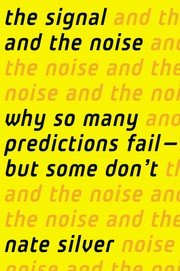 The Signal and the NoiseNate SilverA clear-eyed, intellectually humble journey through the chaotic world of data, teaching you how to spot the truth hidden in the static.
 Calling BullshitCarl T. Bergstrom and Jevin D. WestA witty, empowering toolkit for cutting through the noise of a data-drenched world.
 The half-life of factsSamuel ArbesmanA reassuring and fascinating exploration of why what we know is always changing, and how to find comfort in the predictable rhythms of discovery.