Books › The beak of the finch
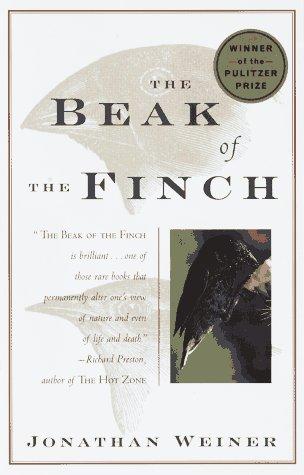
The beak of the finch
First published 1994 · 352 pages
A sun-baked, meticulously observed journey to a remote island that transforms the abstract concept of evolution into a thrilling, visible reality.
What it feels like
Reading this book feels like sitting quietly on a sun-baked, wind-scoured island, watching the gears of the natural world turn in real time. It is a steady, deeply immersive experience that blends the meticulous patience of scientific fieldwork with the sweeping, poetic grandeur of natural history. The prose is elegant and lucid, taking complex biological concepts and grounding them in the dirt, drought, and daily survival of tiny birds. There is a profound sense of awe that builds slowly, shifting your perspective until the landscape around you feels alive with invisible, dynamic forces. It will delight readers who crave narrative science that doesn't just explain the world, but fundamentally changes how they see their place within it.
- Mood
- sun-baked
- contemplative
- wondrous
- isolated
- Tone
- reverent
- observant
- lucid
- earnest
- Pace
- steady
- Themes
- relentless march of time · nature's adaptability · beauty of scientific dedication · interconnectedness of life · survival and resilience
- The writing
- Elegant, lucid, and deeply descriptive, blending rigorous scientific explanation with poetic nature writing.
- The arc
- Moves from quiet curiosity about a remote island to a profound, awe-inspiring realization of nature's dynamic reality.
- Who it's for
- Readers who love immersive, narrative-driven science and find deep philosophical resonance in the meticulous observation of the natural world.
Content notes
- animal death
- environmental stress
- starvation
About the book
On a desert island in the heart of the Galapagos archipelago, where Darwin received his first inklings of the theory of evolution, two scientists, Peter and Rosemary Grant, have spent twenty years proving that Darwin did not know the strength of his own theory. For among the finches of Daphne Major, natural selection is neither rare nor slow: it is taking place by the hour, and we can watch.
In this dramatic story of groundbreaking scientific research, Jonathan Weiner follows these scientists as they watch Darwin's finches and come up with a new understanding of life itself. The Beak of the Finch is an elegantly written and compelling masterpiece of theory and explication in the tradition of Stephen Jay Gould.
Description from Open Library.
Books like The beak of the finch
See why they match Why evolution is trueJerry A. CoyneA masterclass in scientific clarity that leaves you marveling at the magnificent, undeniable reality of the natural world.
 On the origin of species by means of natural selectionCharles DarwinA meticulous, awe-inspiring journey through the interconnected web of life that forever altered humanity's understanding of its place in the universe.
 Darwin's dangerous ideaDaniel C. DennettAn intellectually dizzying journey that uses a single biological concept to dismantle and rebuild your understanding of meaning itself.
 The Song of the DodoSimon & SchusterA globe-trotting, intellectually thrilling journey through the fragile, isolated ecosystems where evolution and extinction collide.
 The Greatest Show on EarthRichard DawkinsA passionate, unapologetic masterclass in scientific deduction that transforms the mechanics of biology into a source of profound wonder.
 EvolutionCarl ZimmerA thoughtful exploration of the historical roots and enduring significance of a foundational scientific concept.