Books › The Human Condition

The Human Condition
First published 1958 · 484 pages
A rigorous, sweeping philosophical diagnosis of modern alienation that challenges how we understand labor, action, and what it means to be truly free.
What it feels like
Reading this foundational work of political philosophy feels like stepping into a vast, brilliantly lit amphitheater of thought. The pace is steady and demanding, requiring you to slow down and wrestle with its dense, meticulously constructed arguments. Yet, the intellectual payoff is immense. The atmosphere is weighty and deeply contemplative, steeped in a sobering urgency about the trajectory of modern society. As you move through its pages, a profound sense of clarity emerges, stripping away everyday assumptions about work, labor, and human action. It is a deeply serious, intellectually expansive experience designed for readers who want to understand the structural roots of our modern alienation and who find comfort in rigorous, uncompromising philosophical inquiry.
- Mood
- contemplative
- weighty
- intellectually expansive
- sobering
- Tone
- authoritative
- urgent
- analytical
- erudite
- serious
- Pace
- steady
- Themes
- the nature of human action · public vs. private life · modern alienation · technological detachment · political freedom
- The writing
- Dense, meticulously structured, and deeply erudite, the sentences demand slow, deliberate reading but reward the effort with striking, paradigm-shifting clarity.
- The arc
- The journey shifts from a fascinating excavation of ancient civic ideals to a sobering, urgent confrontation with the isolation of modern technological society.
- Who it's for
- Thinkers and political junkies who crave rigorous, foundational philosophy to help them make sense of modern social alienation and the loss of civic agency.
Content notes
- existential dread
About the book
A work of striking originality bursting with unexpected insights, The Human condition is in many respects more relevant now than when it first appeared in 1958. In her study of the state of modern humanity, Hannah Arendt considers humankind from the perspective of the actions of which it is capable. The problems Arendt identified then--diminishing human agency and political freedom, the paradox that as human powers increase through technological and humanistic inquiry, we are less equipped to control the consequences of our actions--continue to confront us today. This new edition, published to coincide with the fortieth anniversary of its original publication, contains an improved and expanded index and a new introduction by noted Arendt scholar Margaret Canovan which incisively analyzes the book's argument and examines its present relevance. A classic in political and social theory, The Human condition is a work that has proved both timeless and perpetually timely.
Description from Open Library.
Books like The Human Condition
See why they match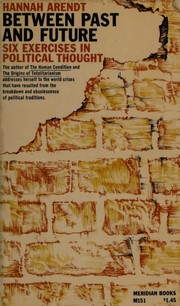 Between past and futureHannah ArendtA rigorous intellectual workout that bridges the terrifying gap between a shattered historical tradition and an uncertain tomorrow.
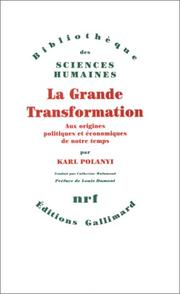 The Great TransformationKarl PolanyiA sweeping, intellectually rigorous dismantling of the free-market myth that fundamentally changes how you view the relationship between society and the economy.
 On revolutionHannah ArendtA masterclass in political philosophy that dissects the anatomy of human freedom and the historical tragedies that so often betray it.
 The Ecology of FreedomMurray BookchinA sweeping, interdisciplinary manifesto that traces the roots of human domination and charts a visionary path toward ecological liberation.
 One-Dimensional ManHerbert MarcuseA dense, paradigm-shifting critique that peels back the comfortable veneer of consumer society to reveal the invisible cages of modern capitalism.
 Human ActionLudwig von MisesA profound, analytical exploration of how individual human choices build the complex machinery of the global economy.