Books › The Knowledge

The Knowledge
384 pages
A fascinating, pragmatic thought experiment that strips modern civilization down to its studs to show you exactly how to rebuild it.
What it feels like
Reading this book feels like being handed the ultimate cheat code for human history. It wraps a deeply informative science and engineering lesson inside the thrilling, slightly eerie premise of a post-apocalyptic survival manual. The pace is steady and methodical, taking the time to marvel at the hidden complexities of everyday things—from agriculture to chemistry to mechanics—that we entirely take for granted. There is a grounded, pragmatic tone throughout, yet the overarching mood is one of awe at human ingenuity. It shifts your perspective, transforming a sobering look at the fragility of modern civilization into an empowering celebration of collective knowledge. It is a perfect, thought-provoking read for curious tinkerers and armchair preppers who want to understand the invisible scaffolding of our world.
- Mood
- thought-provoking
- grounded
- awe-inspiring
- slightly eerie
- Tone
- pragmatic
- informative
- curious
- authoritative
- Pace
- steady
- Themes
- fragility of civilization · human ingenuity · interconnectedness of technology · self-reliance · the foundations of science
- The writing
- Clear, methodical, and highly accessible, breaking down complex chemistry and engineering into fascinating, digestible explanations.
- The arc
- Begins with a sobering realization of modern vulnerability and builds into a deep, empowering appreciation for human ingenuity and collective knowledge.
- Who it's for
- Curious tinkerers, armchair preppers, and science enthusiasts who love peeling back the curtain on how everyday infrastructure actually works.
Content notes
- apocalyptic scenarios
- societal collapse
About the book
"How would you go about rebuilding a technological society from scratch? If our technological society collapsed tomorrow, perhaps from a viral pandemic or catastrophic asteroid impact, what would be the one book you would want to press into the hands of the postapocalyptic survivors? What crucial knowledge would they need to survive in the immediate aftermath and to rebuild civilization as quickly as possible-a guide for rebooting the world? Human knowledge is collective, distributed across the population. It has built on itself for centuries, becoming vast and increasingly specialized. Most of us are ignorant about the fundamental principles of the civilization that supports us, happily utilizing the latest-or even the most basic-technology without having the slightest idea of why it works or how it came to be. If you had to go back to absolute basics, like some sort of postcataclysmic Robinson Crusoe, would you know how to re-create an internal combustion engine, put together a microscope, get metals out of rock, accurately tell time, weave fibers into clothing, or even how to produce food for yourself? Regarded as one of the brightest young scientists of his generation, Lewis Dartnell proposes that the key to preserving civilization in an apocalyptic scenario is to provide a quickstart guide, adapted to cataclysmic circumstances. The Knowledge describes many of the modern technologies we employ, but first it explains the fundamentals upon which they are built. Every piece of technology rests on an enormous support network of other technologies, all interlinked and mutually dependent. You can't hope to build a radio, for example, without understanding how to acquire the raw materials it requires, as well as generate the electricity needed to run it. But Dartnell doesn't just provide specific information for starting over; he also reveals the greatest invention of them all-the phenomenal knowledge-generating machine that is the scientific method itself. This would allow survivors to learn technological advances not explicitly explored in The Knowledge as well as things we have yet to discover. The Knowledge is a brilliantly original guide to the fundamentals of science and how it built our modern world as well as a thought experiment about the very idea of scientific knowledge itself"--
Description from Open Library.
Books like The Knowledge
See why they match The great unknownMarcus du SautoyA whirlwind, deeply personal tour through the profound mysteries and outer limits of human knowledge.
 SevenevesNeal StephensonA meticulously engineered, high-stakes thought experiment about the end of the world and the grueling, orbital mechanics of human survival.
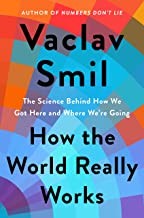 How the World Really WorksVaclav SmilA bracing, data-drenched cold plunge into the physical realities and hidden infrastructures that keep modern civilization running.
 The half-life of factsSamuel ArbesmanA reassuring and fascinating exploration of why what we know is always changing, and how to find comfort in the predictable rhythms of discovery.
 The death of expertiseThomas M. NicholsA sharp, exasperated diagnosis of our modern information crisis that validates your frustration with the 'do your own research' era.
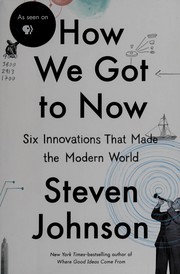 How we got to nowSteven JohnsonA thrilling intellectual treasure hunt that reveals the invisible threads connecting a glass of clean water to the invention of the microchip.