Books › The Perfect Heresy
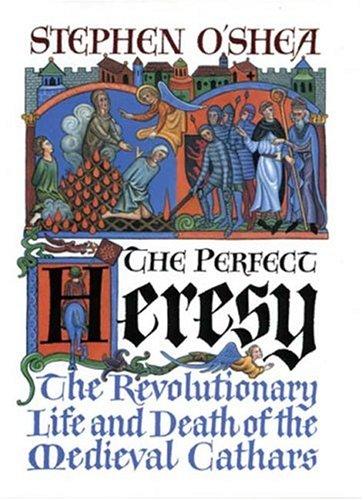
The Perfect Heresy
First published 2000 · 352 pages
An eloquent and tragic historical chronicle of a revolutionary medieval movement and its devastating eradication by the Church.
What it feels like
Reading this book feels like watching a fragile, utopian dream be systematically crushed by the relentless machinery of power. The narrative moves at a steady, engaging pace, eloquently guiding the reader through the turbulent landscape of thirteenth-century southern France. The mood shifts dramatically from the awe-inspiring discovery of a progressive, egalitarian society to a somber, ominous dread as the forces of orthodoxy gather. The prose is authoritative yet highly readable, transforming complex theological clashes and decades of crusades into a mind-boggling, tragic tale. It is a perfect fit for history enthusiasts who are drawn to stories of religious rebellion, the clash of ideologies, and the dark, devastating origins of the Inquisition.
- Mood
- ominous
- turbulent
- somber
- Tone
- eloquent
- dramatic
- authoritative
- tragic
- Pace
- steady
- Themes
- religious persecution · clash of ideologies · abuses of power · revolutionary ideals
- The writing
- Eloquent and narrative-driven, transforming complex medieval history into a compelling chronicle.
- The arc
- Moves from the awe of discovering a progressive movement to the grim devastation of its systematic eradication.
- Who it's for
- Readers fascinated by medieval history, religious rebellions, and the tragic origins of the Inquisition.
Content notes
- religious persecution
- war and crusades
- systematic extermination
About the book
The Revolutionary Life and Death of the Medieval CatharsAt the beginning of the thirteenth century, the Cathars, a group of heretical Christians, rose to prominence in Languedoc, now a region of southern France, but then a patchwork of city-states and principalities beholden to neither king nor bishop. The Cathars held revolutionary beliefs that threatened the authority of the Catholic Church as well as the legitimacy of feudal law: They thought the idea of Hell to be a sham; they rejected all sacraments, including marriage; they thought private property an absurd notion and that all things worldly were corrupt; and they preached religious tolerance and equality of the sexes.Supported by the leaders of Languedoc, Catharism enraged the new and formidable pope, Innocent III, who was determined to flex the Church’s muscle after decades of ineffectual weakness. Innocent resolved to eradicate what is now known as the Great Heresy. He recruited the forces of France, eager to expand her territory to the south, to undertake a systematic extermination of the Cathars and their supporters through a series of crusades between 1209 and 1229. By the time the wars were finally over, the ancient social fabric of the Languedoc had been destroyed, the territory of France reached as far as the Mediterranean, and a terrifying new force—the Inquisition—had been unleashed that would torment Europe for centuries.The Perfect Heresy eloquently chronicles the life and death of the Cathar movement—one of Western civilization’s most mind-boggling tales. As he did in his highly praised Back to the Front, Stephen O’Shea brings long-ago events to life though the energy of his prose and the clarity of his insight. Full of colorful and passionate personalities, his latest book sheds new light on the thirteenth century and on the timelessness of religious intolerance.
Description from Open Library.
Books like The Perfect Heresy
See why they match The CrusadesThomas AsbridgeA sweeping, blood-soaked tapestry of medieval holy war that reads with the cinematic intensity of an epic novel.
 LabyrinthKate MosseA sun-baked, dual-timeline mystery where the blood-soaked secrets of medieval France bleed into a modern-day archaeological thriller.
 No god but GodReza AslanA sweeping, narrative-driven journey through the history of a misunderstood faith that feels both deeply scholarly and profoundly human.
 The Closing of the Western MindCharles FreemanA sweeping intellectual history that mourns the loss of classical inquiry to the rigid dogmas of early religious authority.
 Lost ChristianitiesBart D. EhrmanA fascinating archaeological dig through the suppressed texts and forgotten voices of early religion.
 A Distant MirrorBarbara Wertheim TuchmanA sweeping, unsentimental plunge into a century of apocalyptic chaos, where chivalric ideals collide with plague, war, and human folly.