Books › The private life of Chairman Mao
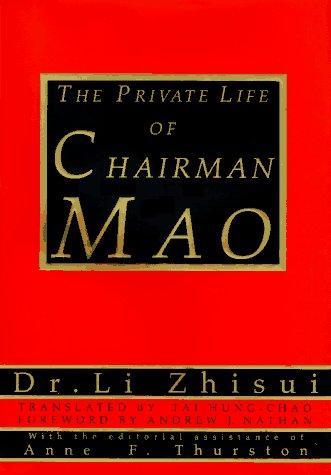
The private life of Chairman Mao
First published 1994 · 736 pages
A claustrophobic, fly-on-the-wall descent into the paranoid and decadent inner sanctum of absolute power.
What it feels like
Reading this memoir feels like being locked inside a gilded, increasingly suffocating cage. The narrative moves at a steady, methodical pace, anchored by the clinical yet deeply observant voice of a physician who finds himself trapped in the inner orbit of a capricious tyrant. The mood is profoundly claustrophobic and tense, steeped in the creeping dread of watching personal whims translate into national tragedies. It strips away the mythos of a historical titan to reveal a landscape of paranoia, decadence, and moral decay. The prose is clear and unvarnished, delivering shocking intimacies with a chilling detachment. It will thoroughly captivate history enthusiasts and anyone fascinated by the psychological realities of absolute power, offering a front-row seat to the banality and terror of a totalitarian court.
- Mood
- claustrophobic
- tense
- shadowy
- uneasy
- Tone
- observant
- clinical
- disillusioned
- candid
- critical
- Pace
- steady
- Themes
- absolute power and corruption · survival in a totalitarian court · the banality of tyranny · historical disillusionment · intimacy with a dictator
- The writing
- Clear, methodical, and grounded in the observant detachment of a medical professional, making the shocking revelations feel all the more grounded.
- The arc
- Begins with the awe of proximity to greatness, slowly descending into a chilling realization of the tyrant's profound moral decay and the devastating consequences of his whims.
- Who it's for
- Readers fascinated by the psychological mechanics of absolute power and the hidden, often disturbing, personal lives of historical titans.
Content notes
- sexual exploitation
- political persecution
- descriptions of famine
- medical details
- death and dying
About the book
From 1954 until Mao Zedong's death twenty-two years later, Dr. Li Zhisui was the Chinese ruler's personal physician, which put him in almost daily - and increasingly intimate - contact with Mao and his inner circle. For most of these years, Mao's health was excellent; thus he and the doctor had time to discuss political and personal matters. Dr. Li recorded many of these conversations in his diaries as well as in his memory.
In The Private Life of Chairman Mao he vividly reconstructs his extraordinary experience. The result is a book that will profoundly alter our view of Chairman Mao and of China under his rule.
Dr. Li clarifies numerous long-standing puzzles, such as the true nature of Mao's feelings toward the United States and the Soviet Union. He describes Mao's deliberate rudeness toward Khrushchev when the Soviet leader paid his secret visit to Beijing in 1958, and we learn here, for the first time, how Mao came to invite the American table tennis team to China, a decision that led to Nixon's historic visit a few months later.
We also learn why Mao took the disastrous Great Leap Forward, which resulted in the worst famine in recorded history, and his equally strange reason for risking war with the United States by shelling the Taiwanese islands of Quemoy and Matsu.
Dr. Li supplies surprising portraits of Zhou Enlai and many other top leaders. He describes Mao's perverse relationship with his wife, and gives us insight into the sexual politics of Mao's court. We witness Mao's bizarre death and the even stranger events that followed it. Dr. Li tells of Mao's remarkable gift for intimacy, as well as of his indifference to the suffering and deaths of millions of his fellow Chinese, including old comrades.
Readers will find here a full and accurate account of Mao's sex life, and of such personal details as his peculiar sleeping arrangements and his dependency on barbiturates.
Description from Open Library.
Books like The private life of Chairman Mao
See why they match MaoJon HallidayA relentless, chilling dismantling of a historical titan that exposes the staggering human cost of absolute power.
 Mao's great famineFrank DikötterA meticulously documented descent into one of history's darkest chapters, where bureaucratic hubris meets unimaginable human suffering.
 Life and death in ShanghaiNien ChengA harrowing yet profoundly inspiring testament to a woman's unbreakable dignity in the face of totalitarian madness.
 Red AzaleaAnchee MinA candid and beautifully written memoir of finding forbidden love and emotional survival amidst the oppressive fear of the Cultural Revolution.
 Mao Tŝe-tung's quotationsMao ZedongA pocket-sized arsenal of militant maxims designed to mobilize the masses and dismantle the old world.
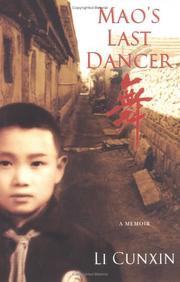 Mao's last dancerLi, CunxinAn inspiring, true-life journey of a young boy plucked from poverty and thrust into the rigorous, transformative world of elite ballet.