Books › The Psychology of Everyday Things

The Psychology of Everyday Things
First published 1998 · 370 pages
An empowering lens shift that transforms daily frustrations with objects into a fascinating exploration of human psychology.
What it feels like
Reading this book feels like putting on a pair of glasses that suddenly brings the invisible architecture of the world into sharp focus. It moves at a steady, conversational pace, acting as a deeply empathetic guide through the daily frustrations we usually blame on ourselves. Instead of feeling incompetent when you cannot figure out a shower faucet or a confusing door, you are enveloped in an intellectually stimulating and surprisingly validating atmosphere that points the finger squarely at bad design. The prose is clear and pragmatic, stripping away academic jargon in favor of relatable, everyday examples. It will delight curious thinkers, tinkerers, and anyone seeking the quiet thrill of finally understanding why the objects around us behave the way they do.
- Mood
- intellectually stimulating
- eye-opening
- pragmatic
- Tone
- empathetic
- analytical
- accessible
- wry
- Pace
- steady
- Themes
- human-centered design · the hidden language of objects · overcoming user frustration · psychology of interaction
- The writing
- Clear, conversational, and grounded in highly relatable, everyday anecdotes that make complex cognitive concepts feel like common sense.
- The arc
- Transitions from the relatable frustration of everyday incompetence to an empowering, enlightened understanding of the built world.
- Who it's for
- Curious observers, aspiring designers, and anyone who has ever felt foolish pushing a door that was meant to be pulled.
About the book
The Design of Everyday Things is a best-selling book by cognitive scientist and usability engineer Donald Norman about how design serves as the communication between object and user, and how to optimize that conduit of communication in order to make the experience of using the object pleasurable. One of the main premises of the book is that although people are often keen to blame themselves when objects appear to malfunction, it is not the fault of the user but rather the lack of intuitive guidance that should be present in the design.
Description from Open Library.
Books like The Psychology of Everyday Things
See why they match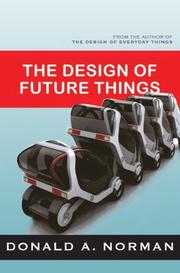 The Design of Future ThingsDon NormanA fascinating, consumer-oriented exploration of how we interact with the increasingly intelligent machines that populate our daily lives.
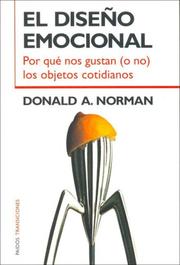 Emotional DesignDonald A. NormanA fascinating lens that permanently alters how you look at the objects surrounding you, revealing the hidden emotional conversations between humans and things.
 Things That Make Us SmartDon NormanA fascinating, accessible exploration of how the tools we build end up shaping the way we think.
 100 things every designer needs to know about peopleSusan WeinschenkA brisk, bite-sized masterclass in the psychological quirks that drive human behavior and interaction.
 Designing the user interfaceBen Shneiderman and Catherine PlaisantAn authoritative, structured deep-dive into the principles of making technology comprehensible and satisfying for human users.
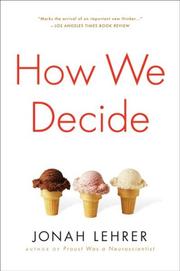 How we decideJonah LehrerA brisk, anecdote-rich tour through the hidden neurological gears that drive our everyday choices.